Englandism News & Commentary
An Independent Perspective on England
Englandism News & Commentary examines the history, identity and constitutional position of England, with particular attention to the country’s 1,100th anniversary in 2027.
We publish news, historical research and informed opinion on English national identity, democratic representation, Westminster Government policy and the evolving relationship between the nations of the United Kingdom.
Englandism advocates recognition of England’s national identity while seeking to distinguish documented evidence, independent reporting and editorial opinion.
Our Editorial Approach
Englandism is an independently published website examining England’s history, national identity and constitutional position within the United Kingdom.
Our purpose is to encourage informed discussion through historical research, political analysis and commentary. We approach these subjects from a perspective that recognises the importance of English national identity while acknowledging that others may reach different conclusions.
We aim to distinguish verifiable facts from interpretation and opinion, draw upon identifiable sources wherever practicable, and represent opposing arguments fairly. Where errors are identified, we seek to correct them.
Englandism does not claim institutional authority or political neutrality. Its credibility rests on the quality of its evidence, the transparency of its arguments and a willingness to subject its conclusions to scrutiny.
England Day 2027
News, developments and commentary on England’s 1,100th anniversary in 2027, the campaign for an England Day bank holiday on 12th July, and proposals to commemorate the unification of England under King Æthelstan in 927.
Proclaiming Scotland’s World Cup bank holiday (for turning up)
A paradox: Scotland was granted an additional national bank holiday on Monday 15 June 2026 to mark its men's football team's return to the FIFA World Cup after 28 years. The decision raises a timely question for England: if a sporting 'milestone' can justify a one-off...
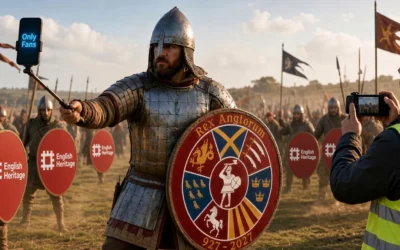
English Heritage Celebrates 960 Years Since the Norman Conquest — But What About England’s 1,100th Anniversary?
10 October 2026 | Englandism News English Heritage is marking the 960th anniversary of the Battle of Hastings with a major historical reenactment at Battle Abbey on 10–11 October 2026. Hundreds of reenactors will gather at the site where King Harold II and William,...
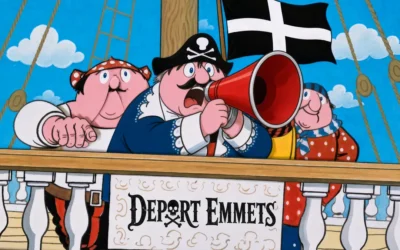
England Day 2027: Could Celebrating England’s Unification Cause Offence Across the United Kingdom?
As England approaches the 1,100th anniversary of its unification under King Æthelstan, could a national bank holiday on Monday 12 July 2027 cause offence elsewhere in the United Kingdom? And should the differing histories and national identities of the UK's four...
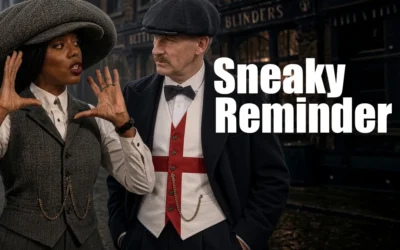
Conservatives Come to Birmingham: Will England’s 1,100th Anniversary Be on the Agenda?
When the Conservative Party gathers in Birmingham from 4–7 October 2026, it will do so in a city where its own local Conservatives have already committed themselves to celebrating a significant anniversary: 1,100 years since the unification of England under King...
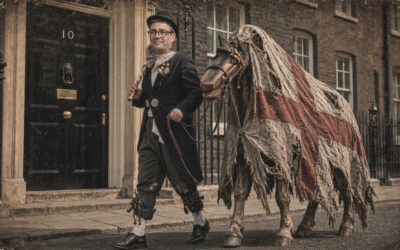
England Day 2027 – Arguments Against an England 1100 Bank Holiday
The Government’s 10 Arguments Against an England 1100 Bank Holiday — Examined What arguments could the UK Government use against a bank holiday for England’s 1,100th anniversary — and are there contradictions in its position? Direct answer: The UK Government has...
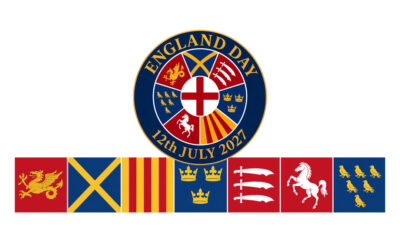
England Day 2027: an English bank holiday for the 927 anniversary
Direct answer: England Day is the name Englandism gives to Monday 12 July 2027, the 1,100th anniversary of England’s unification under King Æthelstan at Eamont Bridge on 12 July 927. The aim of Englandism is that England Day should be an English bank holiday. What...
English Identity
Exploring English national identity, patriotism, history and cultural heritage, including how Englishness is understood, expressed and represented in contemporary Britain.
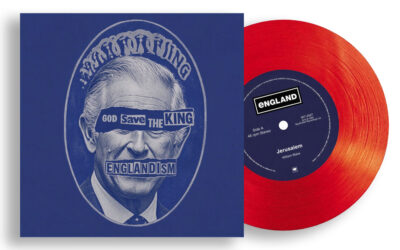
FOE (Fear of England) God Save the King versus Jerusalem
“That does not mean that we should fear recognising England as an entity” — Toby Perkins MP, House of Commons, 13 January 2016 England has its own football team, flag and sporting emblems. Yet when its footballers line up for an international match, they sing the...
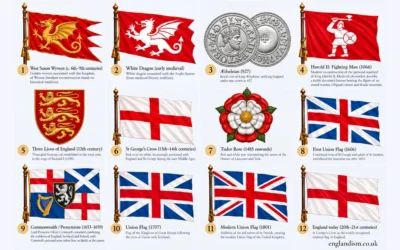
English Flags & Symbols from Wessex to St George’s Cross
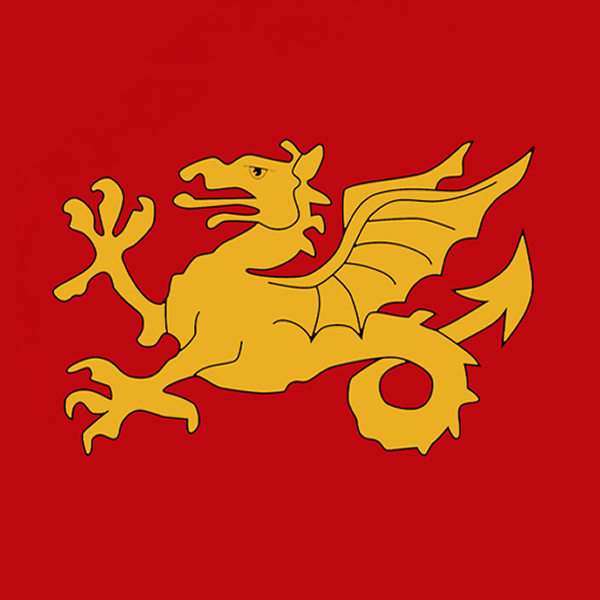
The Evolution of English Flags and Symbols: From Wessex to St George’s Cross England’s flags and emblems did not emerge together or at a single moment. Over more than a thousand years, royal badges, battlefield standards, religious crosses and political union flags...
Is British now the officially approved English identity?
A revealing argument about English identity has emerged in British politics. At its heart is a deceptively simple question: can somebody belong nationally to England without being ethnically English? The debate has been sharpened by former Home Secretary Suella...
Civic v Ethnic Identity: Who Can Be English?
Can someone be born in England, grow up in England, speak English as their first language, support England and regard England as home — yet still not be English? That question goes to the heart of the distinction between civic and ethnic national identity. It has...
Does England Need a National Celebration More Than Ever?
As England approaches its 1,100th anniversary in 2027, a controversy over political “nostalgia” raises a wider question: if traditional images of England are increasingly viewed through a political lens, is there an even stronger case for a national celebration that...
Government Policy on English Identity: What Does It Say? | Englandism
Government policy on English identity The UK Government has explicitly recognised English identity as part of the United Kingdom's national identity and has said that people should be able to express national pride. Its approach is set out in the Government's 2026...
English Devolution
Examining the changing governance of England, regional devolution, elected mayors and democratic representation, with analysis of England’s constitutional position within the United Kingdom.
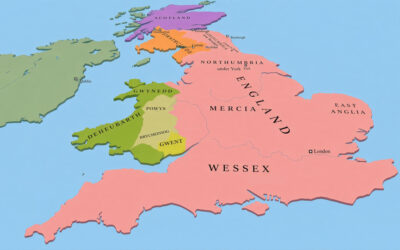
We’re Back! The Only Way is Wessex
The Only Way is Wessex. We're back and it's official, as of 28th October 2026 Wessex rides again. Wessex has resurrected from 1066 and has now been officially endorsed, as a thing, by the King of the North, Andy Burnham: "Yes, I’m always happy to create more mayors,...
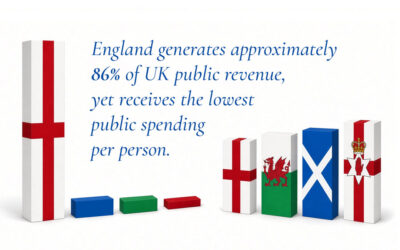
Westminster’s Time Is Ending — But Who Speaks for the Nation That Pays Most of Its Bills?
The Cardiff memorandum calls for Scotland, Wales and Ireland to determine their constitutional futures. England is absent from its account of national self-determination — even though England provides the largest share of the UK's public revenues. Three parties, three...

A New Runnymede? How English Devolution Could Unintentionally Lead to an English Parliament
Could the Government's own devolution reforms create a collective demand for English self-government? The comparison with Runnymede in 1215 is not that today's elected mayors are medieval barons. It is that regional leaders seeking practical concessions from central...
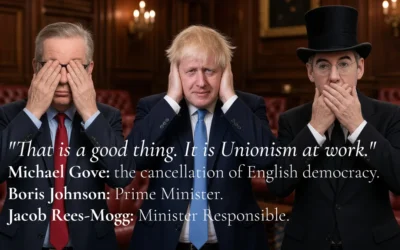
The British State and English National Identity: see no EVEL.
Why can Britain celebrate English history and culture while resisting the creation of distinct national political institutions for England? The answer may lie less in hostility towards Englishness than in the constitutional interests of Westminster itself. Celebration...
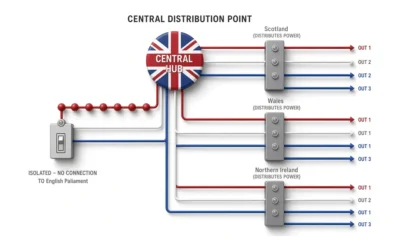
Andy Burnham Wants to ‘Rewire’ the UK – But Where Does England Plug In?
Andy Burnham Wants to ‘Rewire’ the UK – But Where Does England Plug In? Direct answer: Prime Minister Andy Burnham says he wants to “rewire” the United Kingdom by moving power out of Whitehall and closer to people and places. But there is a striking difference in the...

Who Governs Greater Manchester Under English Devolution – and How Many People Voted?
Who Governs Greater Manchester Under English Devolution – and How Many People Voted? Direct answer: Greater Manchester is one of England's Established Mayoral Strategic Authorities, the highest level of the Government's English devolution system. Its directly elected...
Could English Devolution Create a Two-Tier England?
Could English Devolution Create a Two-Tier England? Direct answer: Yes, it could. England's new devolution system does not initially give every part of England the same powers, funding arrangements or fiscal opportunities. The Government has created different levels...

Is the Future of England Being Discussed at Labour Conference 2026?
Is the Future of England Being Discussed at Labour Party Conference 2026? Direct answer: Yes. The future of England is being discussed extensively at the 2026 Labour Party Conference in Liverpool, particularly through debates and fringe events about English...
Every postcode? Burnham devolution and inequality | Englandism
← Englandism home English devolution · Argument Prime Minister Andy Burnham says devolution will deliver good growth in every postcode. The fiscal and institutional design of the programme points the other way: places will compete, and starting gaps in tax base and...
Was English regional devolution voted for?
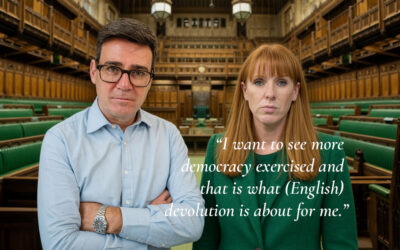
England, devolution and consent Was English regional devolution voted for? England was not asked. Scotland, Wales and Northern Ireland were. The UK Government is rolling out Strategic Authorities across England without the founding referendum the other three nations...
England General
News, historical research and commentary on England’s society, politics, culture and national affairs, covering subjects beyond our principal editorial categories.
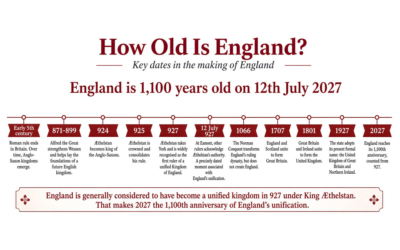
How Old Is England? When Was England Founded?
England is generally considered to have become a unified kingdom in 927 AD, under King Æthelstan. That makes England approximately 1,099 years old in 2026 and 1,100 years old in 2027. But the answer depends on what we mean by England. The land, its inhabitants, the...

The Curse of the Mummy versus Yorkshire Puddings
A three thousand year old Egyptian mummy must now have its privacy protected, its burial wishes considered and its dignity carefully reviewed. The good folk of Yorkshire might have appreciated similar consideration before the Normans burned their homes, destroyed...
English Flags & Symbols from Wessex to St George’s Cross
The Evolution of English Flags and Symbols: From Wessex to St George’s Cross England’s flags and emblems did not emerge together or at a single moment. Over more than a thousand years, royal badges, battlefield standards, religious crosses and political union flags...
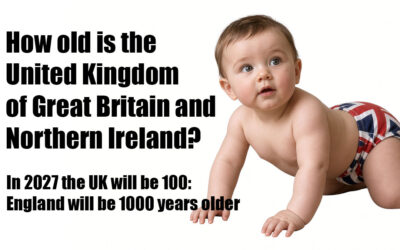
How Old Is the United Kingdom?
Direct answer: The United Kingdom was created on 1 January 1801, making it 225 years old in 2026. Its present constitutional name, the United Kingdom of Great Britain and Northern Ireland, dates from 12 April 1927. England itself is much older, with the unified...
Retro Englandism: the 1999–2009 site on the Wayback Machine
Direct answer: The original Englandism website ran from 1999 to 2009. A complete snapshot of its About page is held by the Internet Archive at web.archive.org/web/20091028120614/http://www.englandism.co.uk/about.htm (captured 28 October 2009). The live name...
The European Year of the Normans and the missing English 1100
Direct answer: In 2027 Europe is marking a “Year of the Normans” around the millennium of William the Conqueror, including the Bayeux Tapestry in London. The same year is the 1,100th anniversary of England’s unification under Æthelstan at Eamont Bridge on 12 July 927....
Bookmark or Share the News
All the Englandism news on one mobile friendly page:
| ENGLANDISM.CO.UK | INTERNAL LINKS |
| ENGLANDISM.CO.UK | EXTERNAL LINKS |
Political Independence
Englandism is an independent, non-party-political initiative. It has no affiliation with, or allegiance to, any political party or political organisation. Its purpose is to encourage informed discussion, historical understanding and civic recognition of England, without promoting any party-political agenda.
Its central objective is to promote equivalence of national recognition for England, Scotland, Wales and Northern Ireland within the United Kingdom, respecting the distinct identities, histories and democratic aspirations of all four nations. This website and associated campaign is entirely self-financed and created and maintained without any external funding or control.
Privacy & Data Protection
Englandism respects visitor privacy and is committed to responsible handling of personal information in accordance with applicable UK data protection legislation. This website uses Google Analytics and Bing Webmaster Tools to understand website usage and improve its content. Where required, consent is requested before non-essential cookies or tracking technologies are used. For further information, please see our Privacy Policy.