“That does not mean that we should fear recognising England as an entity”
— Toby Perkins MP, House of Commons, 13 January 2016
England has its own football team, flag and sporting emblems. Yet when its footballers line up for an international match, they sing the national anthem of the United Kingdom. Why does England continue to use God Save the King when Scotland and Wales have established their own sporting anthems?
England and Britain are not the same sporting identity
England competes independently in football, rugby union and other international sports. Its teams wear the Three Lions or the red rose, and supporters wave St George’s Cross. Nevertheless, God Save the King is traditionally played before England football internationals. The song is the national anthem of the United Kingdom, rather than a composition specifically about England.
There is no general constitutional rule requiring English sporting teams to use it. The anthem’s position rests substantially on convention. That distinction matters: the current arrangement is not inevitable.
What do the four nations use?
| Nation | Typical football anthem | Important qualification |
|---|---|---|
| England | God Save the King | Team England uses Jerusalem at the Commonwealth Games. |
| Scotland | Flower of Scotland | A distinct Scottish sporting anthem. |
| Wales | Hen Wlad Fy Nhadau (Land of My Fathers) | A distinct Welsh national anthem. |
| Northern Ireland | God Save the King | Arrangements vary by sport; the all-Ireland rugby union side uses Ireland’s Call. |
It would therefore be inaccurate to say that all three other UK nations use separate anthems in every sport. Northern Ireland’s football tradition is an important exception. Even so, England’s use of the UK anthem creates a conspicuous overlap between English and British identity.
Why did England retain the British anthem?
The explanation is chiefly historical. God Save the King became established as Britain’s anthem by custom. English sporting organisations continued using it, while Scottish and Welsh sporting traditions increasingly adopted distinct national songs.
There is a broader constitutional context. England is both a historic nation and the largest constituent nation of the UK. British institutions have long been concentrated in England, particularly London. Consequently, English and British symbols have often overlapped in public life. This helps explain the tradition, but it is not evidence that a government deliberately prohibited an English anthem.
England has already chosen a different anthem
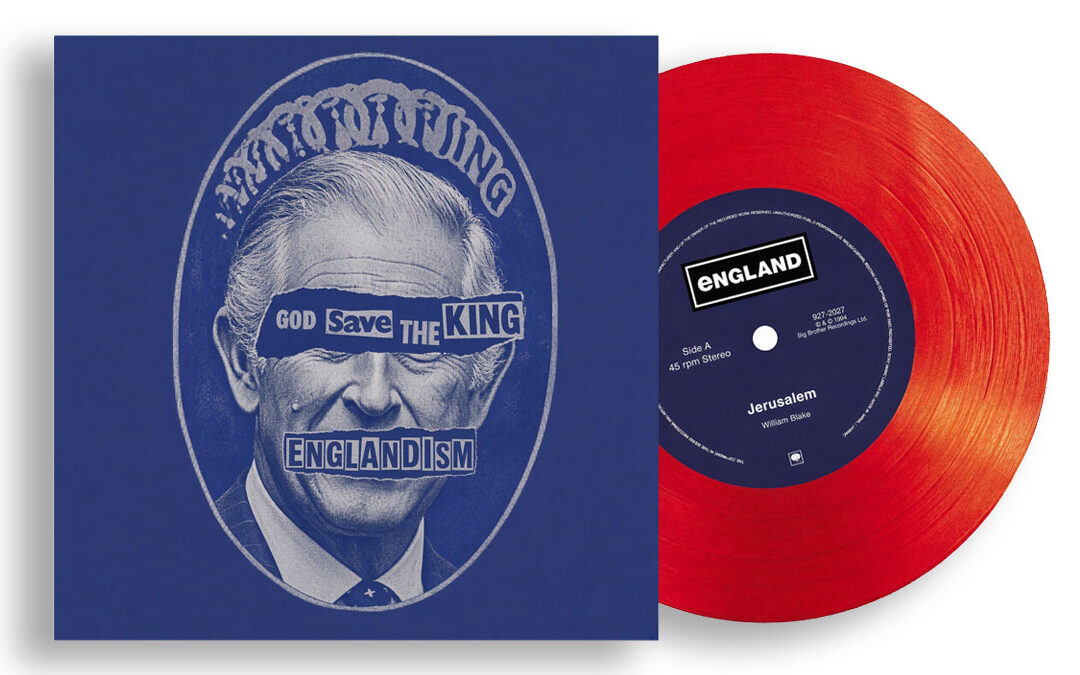
In 2010, Commonwealth Games England announced that Jerusalem would replace Land of Hope and Glory for English gold-medal ceremonies. In a YouGov survey of 1,896 respondents, Jerusalem received 52.5%, Land of Hope and Glory 32.5%, and God Save the Queen 12% (the percentages do not total 100%).
The result demonstrated that an English sporting organisation could adopt a specifically English anthem without challenging the existence of the United Kingdom. The decision was for the Commonwealth Games team, however, not a binding national referendum or a change across all sports.
Source: Team England’s announcement, 30 May 2010.
Parliament considered the question in 2016
On 13 January 2016, Labour MP Toby Perkins introduced an English National Anthem Bill for sporting events involving England. He presented the proposal as compatible with support for the monarchy and the Union. The Commons permitted the Bill’s introduction, but it made no further progress before the parliamentary session ended.
“That does not mean that we should fear recognising England as an entity”
— Toby Perkins MP, House of Commons, 13 January 2016
Perkins argued that recognising the identities of the UK’s four nations could strengthen rather than undermine their relationship. The debate also included opposition to changing the anthem, illustrating that the issue is contested rather than universally agreed.
Read the debate in Hansard and see the Bill’s parliamentary record.
What happened to the 2026 petition?
A petition calling for Jerusalem to become England’s official anthem was rejected in May 2026. The parliamentary petitions service explained that the Government and Parliament were not directly responsible for the matter and that the existing anthem’s use was a matter of tradition, without legal or constitutional status.
That response should not be mistaken for a government decision banning a separate English anthem. Rather, it points towards sporting bodies and public convention as the practical routes to change.
Source: UK Parliament petition decision, 12 May 2026.
The case for retaining God Save the King
There are legitimate arguments for the existing arrangement. Many English supporters regard God Save the King as their anthem too. It expresses loyalty to a shared monarchy and an established British tradition. Replacing it might alienate those who value that continuity, and no alternative commands unanimous support. Nor is there a simple consensus about whether Jerusalem, Land of Hope and Glory or another composition best represents modern England.
The case for a distinct English anthem
The counterargument is equally straightforward: when England competes as England, a song representing England could be more appropriate than the anthem of the whole UK. This need not diminish the British anthem, which would remain fitting for UK-wide state occasions and British representative teams.
The contrast is striking. English football has its own crest, flag, kit and national team, but not a consistently separate pre-match anthem. The choice reflects historical convention rather than any necessary constitutional principle.
English recognition without rejecting British identity
For Englandism, the anthem question illustrates a wider distinction between celebrating England culturally and recognising England institutionally. English national identity is welcomed in sporting symbols, yet its relationship with shared British institutions can remain ambiguous.
A separate sporting anthem would not, by itself, resolve questions of English democratic representation or devolution. It could, however, establish a clearer public distinction between England as a nation and the United Kingdom as a state.
As England approaches the 1,100th anniversary of its unification in 927, the question deserves renewed discussion: when England represents itself, should England have its own song?
Read more: The English Question: Devolution, Democracy and England’s Future · England 1100 · England Day 2027.