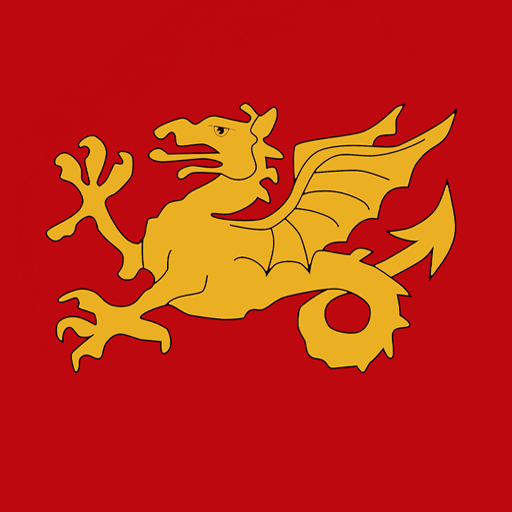

When the Conservative Party gathers in Birmingham from 4–7 October 2026, it will do so in a city where its own local Conservatives have already committed themselves to celebrating a significant anniversary: 1,100 years since the unification of England under King Æthelstan in 927.
That creates an interesting question for the Conservative Party nationally.
Will the party that is increasingly talking about national identity, culture and belonging also embrace the opportunity to celebrate England’s 1,100th anniversary in 2027 — and will it support calls for a commemorative bank holiday?
Birmingham has already made its position clear
In March 2026, Birmingham Local Conservatives announced a programme intended to promote local and national heritage.
Among its commitments was:
“Marking the 1,100th Anniversary of England’s Unification by King Athelstan”
The Birmingham Conservatives said that, with particular emphasis on the city’s Mercian heritage, they intended to hold educational talks, exhibitions and community gatherings during 2027 exploring Æthelstan’s role in creating a united England.
This is therefore more than a passing historical reference. The Conservative organisation in the city hosting the 2026 Conservative Party Conference has already placed England 1100 within its programme of cultural and civic celebration.
Source: Birmingham Conservatives
The location is particularly appropriate. Birmingham lies within the historic territory of Mercia, one of the great Anglo-Saxon kingdoms ultimately incorporated into the kingdom ruled by Æthelstan.
Conservative MPs have also raised England 1100
Interest in the anniversary extends beyond Birmingham.
Conservative MP Alex Burghart is one of the organisers of the independent England’s 1100th initiative, alongside historians including Tom Holland, Simon Keynes, Michael Wood and David Woodman.
The organisation describes 927 as the year in which Æthelstan brought Northumbria under his dominion and created a single “kingdom of the English”. Its objective is to encourage recognition and celebration of England’s 1,100th anniversary during 2027.
Other Conservative parliamentarians have pressed the Government on the issue.
In September 2025, Conservative peer Lord Frost formally asked what plans the Government had:
“to commemorate in 2027 the 1100th anniversary of England’s establishment as a unified state under King Athelstan in 927.”
The Government responded that it was not aware of plans specifically to commemorate the anniversary.
Source: UK Parliament — Lord Frost question
In January 2026 Conservative MP Neil O’Brien asked the Government whether it intended to mark the anniversary. The answer was:
“There are no plans at present for the Government to mark the 1,100th anniversary of the unification of England.”
Source: UK Parliament — Neil O’Brien question
Former Foreign Secretary Sir James Cleverly has also asked the Government about recognition of the anniversary.
Source: UK Parliament — Sir James Cleverly question
Taken together, these interventions demonstrate that England’s 1,100th anniversary has attracted interest from several Conservative parliamentarians rather than from a single MP.
What about an England Day bank holiday?
Here the Conservative parliamentary record becomes even more specific.
Conservative MP Andrew Rosindell formally asked the Government to make 12 July 2027 a public holiday marking the 1,100th anniversary of the unification of England under Æthelstan.
The Government rejected the proposal, saying that the established pattern of bank holidays should remain and citing the economic cost of an additional one-off holiday.
Source: UK Parliament — Andrew Rosindell question
Rosindell subsequently raised the proposal directly in the House of Commons.
Referring to the proposal from the Royal Society of St George for a bank holiday on 12 July 2027, he described the anniversary as a:
“great, momentous occasion for our country”
and asked for parliamentary time to debate it.
Source: Hansard — Business of the House, 16 October 2025
There is therefore already a Conservative parliamentary precedent for supporting precisely the question now facing the Government: should England’s 1,100th anniversary be marked by a national bank holiday?
That does not, however, make a 2027 bank holiday Conservative Party policy. No evidence has yet emerged that the Conservative leadership has formally adopted Rosindell’s proposal.
English identity and Conservative politics
The issue also sits within a much larger Conservative debate about national identity.
Under Kemi Badenoch, the Conservative leadership has placed emphasis on culture, belonging, common identity and national cohesion.
At the Conservative Spring Conference in March 2026, Badenoch argued:
“Having a coherent British identity matters.”
Her emphasis, however, has predominantly been on British identity.
Source: Conservative Party — Spring Conference speech
That leaves an interesting constitutional and cultural question:
Where does English identity fit within that vision?
England accounts for the great majority of the UK population and possesses a history, culture and national identity of its own. Yet unlike Scotland, Wales and Northern Ireland, England has no separate national government or parliament through which that identity is institutionally expressed.
The approaching 1,100th anniversary therefore offers politicians an opportunity to explain how they understand the relationship between English identity and British identity.
Civic English identity or nationalism?
There is an important distinction between celebrating English national identity and promoting an ethnic definition of Englishness.
A commemoration of 927 does not necessarily require either.
Modern England is the product of eleven centuries of migration, political change, cultural exchange and constitutional development. An anniversary can recognise that entire story rather than attempt to define Englishness by ancestry.
A celebration of civic English identity could present belonging as participation in a shared country, culture, institutions and history — regardless of ethnic origin.
That creates an interesting connection with the Conservative leadership’s emphasis on common culture and integration.
The question is whether the Conservatives see English identity as having a distinct place within that framework, alongside their much more frequently expressed commitment to British identity.
Birmingham presents the Conservatives with a question
The setting of the 2026 Conservative Party Conference therefore has a certain symbolism.
Delegates will gather in Birmingham, at the heart of the historic Midlands and within the former kingdom of Mercia.
Their local Conservative hosts have already committed themselves to celebrating 1,100 years of England in 2027.
Conservative MPs and peers including Andrew Rosindell, Alex Burghart, Neil O’Brien, Lord Frost and Sir James Cleverly have, in different ways, already brought the anniversary into public or parliamentary discussion.
And one Conservative MP has explicitly taken the proposal for a 12 July 2027 bank holiday to Parliament.
Yet the national Conservative Party has not, at the time of writing, adopted the bank holiday proposal as party policy.
So as Conservatives arrive in Birmingham, two questions remain open:
Will the Conservative Party formally support national celebrations for England’s 1,100th anniversary in 2027?
Will it support a one-off England Day bank holiday on 12 July 2027 to mark the occasion?
With 2027 approaching, Birmingham would be an appropriate place for the party to set out its position.
Further reading on Englandism: