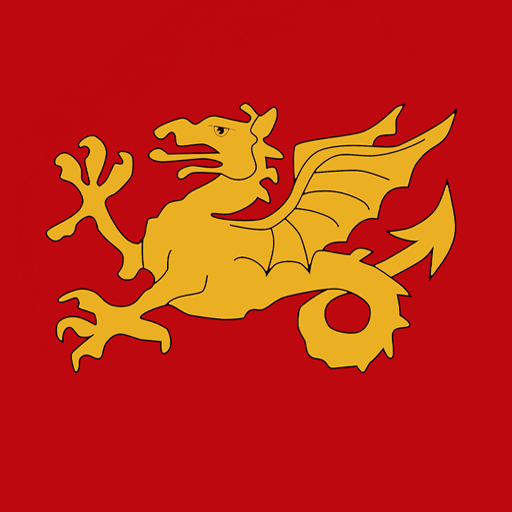
What is England 1100?
The 1,100th anniversary of the unification of England
“English history did not begin in 1066…”
About England 1100
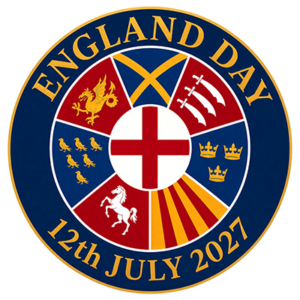
England 1100 marks the 1,100th anniversary in 2027 of the unification of England under King Æthelstan in 927. Learn more about the historical events in England in 927, or visit England Day 2027 for the campaign to commemorate the anniversary, including the proposed bank holiday on Monday 12 July 2027.
What is England 1100?
England 1100 marks the 1,100th anniversary in 2027 of the unification of the Kingdom of England under King Æthelstan in 927.
In 927, Æthelstan took control of York and became the first king to rule the principal Anglo-Saxon kingdoms that formed England. His reign is therefore widely associated with the emergence of a unified Kingdom of England.
England 1100 commemorates 1,100 years of England, from 927 to 2027, and asks how England’s history, national identity and contribution should be recognised in its 1,100th anniversary year.
Why is 2027 the 1,100th anniversary of England?
Celebrating 1100 years since the foundation of England on July 12th 927AD.
In 927 AD, King Æthelstan brought together the major Anglo-Saxon territories of England under one central authority after gaining control of York and, thereby, the A1 and Northumbria.
At Eamont Bridge in Cumbria he met with other rulers, including Constantine of Scotland, confirming submission to a unified Kingdom of the English.
On 12 July 927, Æthelstan met other British rulers at Eamont, near Penrith, following his acquisition of York. This period is widely associated with the political unification of England under Æthelstan, who subsequently used the title Rex Anglorum — King of the English.
“1066 was not the beginning of England, it was a continuation by other means”.
Is England really 1,100 years old in 2027?
2027 marks 1,100 years since the events of 927 traditionally associated with the unification of England under King Æthelstan.
England did not appear suddenly on a single day. Its formation was a historical process involving the consolidation of earlier Anglo-Saxon kingdoms, particularly Wessex and Mercia, and the eventual acquisition of York by Æthelstan in 927.
For this reason, 927 is commonly used as a significant date in the emergence of a unified Kingdom of England, making 2027 an important 1,100-year anniversary.
Who was Æthelstan, the first King of England?
Æthelstan (c.894–939) was an Anglo-Saxon king who is commonly regarded as the first king of a unified England.
And the first king of all the English. In 925 he was crowned at Kingston Upon Thames, the clue’s in the name, after uniting the Anglo-Saxon kingdoms in 927 he went on to decisively defeat an alliance of Vikings, Scots and Britons at Brunanburh in 937.
Æthelstan died in 939 returning to the heart of Wessex at Malmesbury, Wiltshire, where his original tomb can still be seen.
There are no plans at Westminster, the British legislature and executive, to commemorate the establishment of the founding state of the United Kingdom 1100 years ago. Indeed, the only anniversary being celebrated in 2027 is the defeat of Anglo-Saxon England at Hastings in 1066 (and all that).
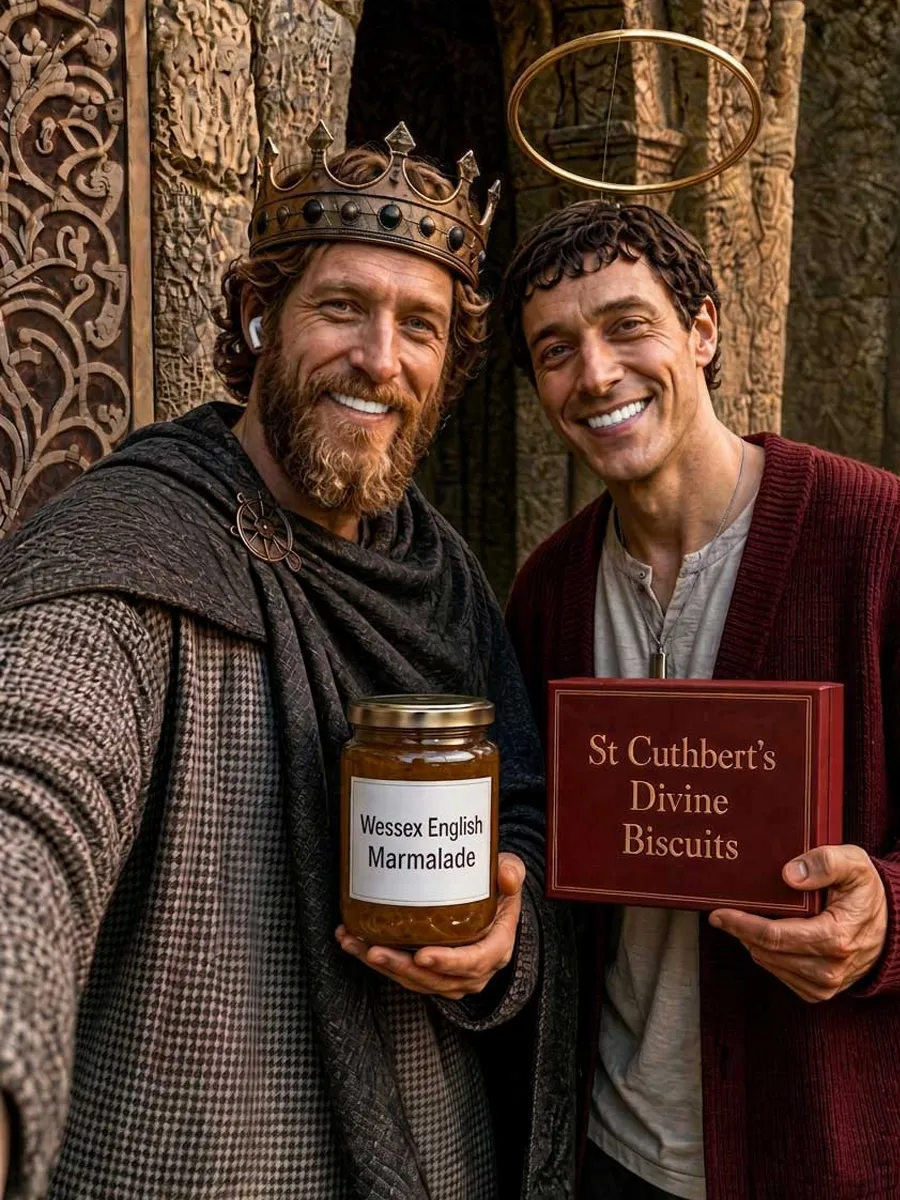
Æthelstan meets St Cuthbert at Chester-le-Street on his way to invading Scotland in 934. In 937 he went on to defeat a combined army at Brunanburh confirming English supremacy.
Was William the Conqueror the first English king?
No. King Charles’ lineage extends considerably further as a continuation of the Anglo-Saxon, House of Wessex.
The present Royal Family’s ancestry can be traced through Æthelstan’s father, Edward the Elder, and his half-brother Edmund I, ultimately back to Alfred the Great.
After 1066, the Anglo-Saxon and Norman royal lines were reunited through the marriage of Henry I and Matilda of Scotland in 1100. The modern monarchy therefore has a genuine familial connection to the royal house that produced Æthelstan, the king associated with the unification of England in 927.
“The French side of my Family’s history in these islands.”
Describing the 1066 Norman Conquest. 02/09/26.
Coincidentally, Wessex was founded 547 years before the Norman Conquest then 547 years after the Conquest, in 1613, the marriage of Elizabeth Stuart to Frederick V created the modern English royal dynasty.
William the Conqueror was married to Matilda of Flanders who became Queen of England, she was a direct descendant of Alfred the Great, Wessex. Their son, Henry I, went on to marry Matilda of Scotland, descended from Edmund Ironside, Wessex.
That’s a slam dunk for Æthelstan and the lads from Wessex and one in the eye for the Norman ‘succession’.
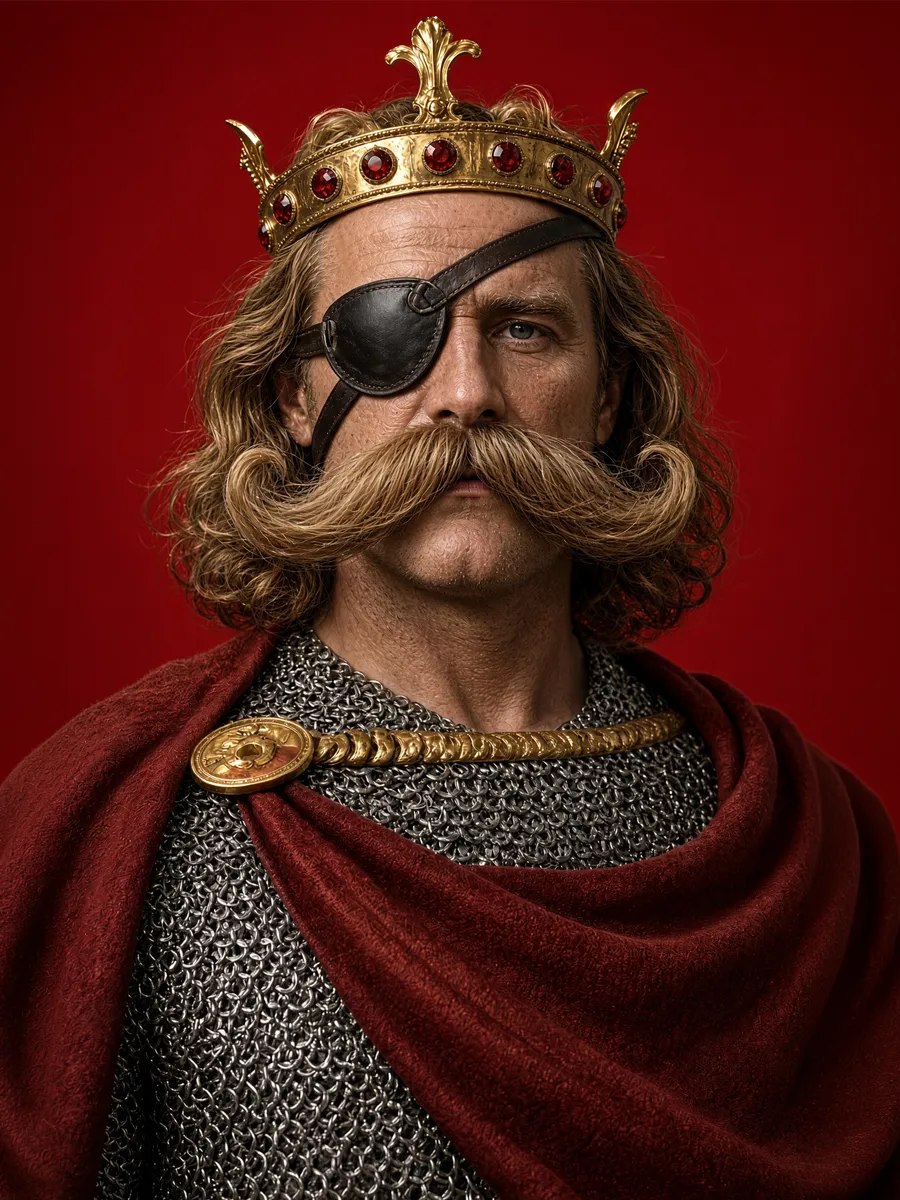
The Earl of Wessex & King Harold II
The Earl of Wessex was a title originally created by the Great Cnut of England.
The title passed to the Earl’s son, Harold Godwinson, Harold II King of England, who was de-eyed at Hastings in 1066.
The Earldom of Wessex, thereby, ended but only to be reinstated by Elizabeth II one thousand years later. The current Prince Edward became Duke of Wessex, who coincidentally, also has a son, James, the current Earl of Wessex. Who is studying tractors and farming in the Cotswolds near Diddly Squat farm.
This not only illustrates another direct connection between Wessex, King Æthelstan and the current royal line, but potentially argues that a combine harvester driver could be King Kaleb of Cooper.
Should England’s 1,100th anniversary be a bank holiday?
Should England mark its 1100th anniversary? Wales has St David’s Day, Scotland has St Andrew’s Day, and Northern Ireland has St Patrick’s Day and all three are official annual public holidays in those nations.
England? St George’s Day on April 23rd is not a public holiday. It might be nice to be graciously granted a day by the British government, perhaps once every 1000 years, to celebrate English identity? And July 12th 2027 just happens to be on a Monday, it’s not close to any other existing English public holidays and the weather is usually quite nice in July.
“The Government has no plans to create a one-off bank holiday to mark the 1100th anniversary of the unification of England under King Athelstan.” October 2025.
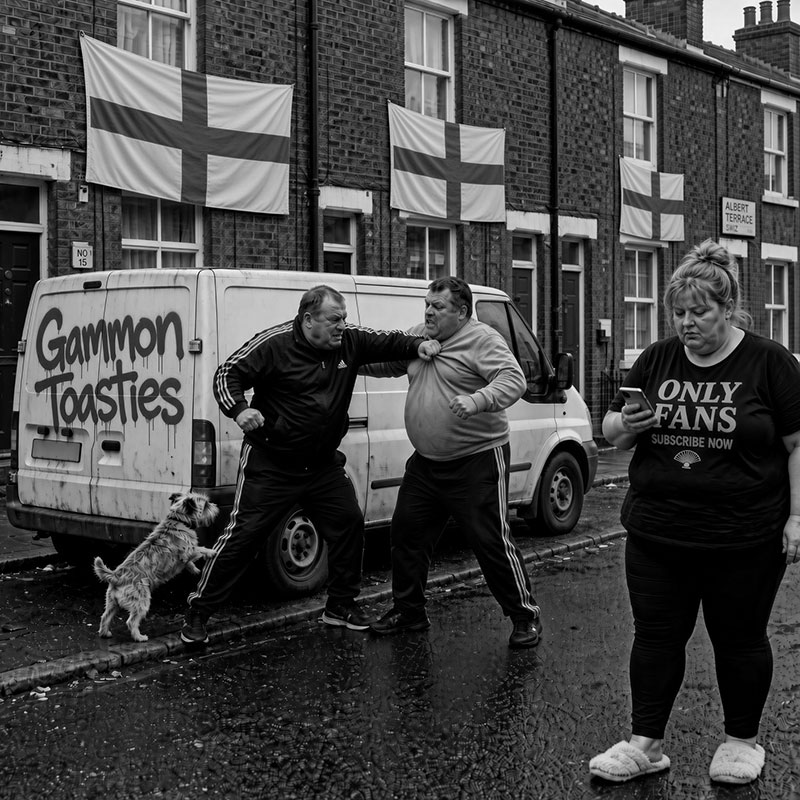
Reasons not to have a bank holiday
England is inconvenient and a bit of a prick in the Westminster bubble
UK Government Opposition
-
English civic patriotism:
It could bring communities together in an inclusive civic and cultural celebration of England’s shared identity, open to everyone who calls England home. -
Devolution:
It could encourage public discussion and democratic engagement with the changing governance of England in the very year of its 1,100th anniversary. -
Recognition within the Union:
It could give England greater national recognition within the United Kingdom and encourage discussion of the differences between England’s system of governance and those of Scotland, Wales and Northern Ireland. -
Understanding our history:
It could encourage discussion of our collective history — exploring the good, the bad and, sometimes, the ugly — rather than ignoring or romanticising the past. -
Countering political extremism:
England 1100 could be celebrated as an inclusive civic birthday party, open to all, rather than an ethnically defined or exclusive event. National identity need not belong to political extremists. -
Which history do we commemorate?
2027 will also see major attention given to the Normans and the legacy of the Norman Conquest. The arrival of the Bayeux Tapestry in Britain makes that story particularly prominent. Why should the story of England before 1066 receive less attention? -
Cost:
Any cost should be considered alongside other major government programmes and investments. If substantial public expenditure can be justified for relocating civil servants, new government campuses and regional administrative infrastructure, the question should at least be asked: what value would a one-off national commemoration of England’s 1,100th anniversary provide?
England 1100 does not need to be a celebration of ethnicity, nostalgia or an imagined golden age.
It can be something much simpler: a civic celebration of a country, its people and the extraordinary fact that the name England has endured for eleven centuries.
A 1,100th birthday happens only once.
Why wouldn’t we celebrate it?
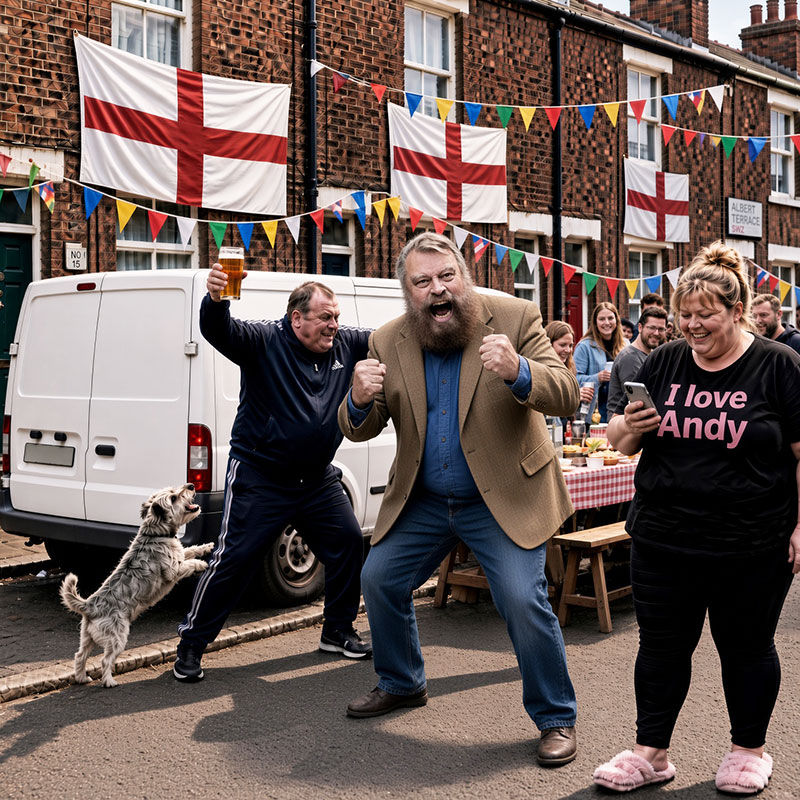
Reasons to have a bank holiday
England has been quite the global success: let’s party like it’s 927
Reasons to be Cheerful
-
English civic patriotism:
It could bring communities together in an inclusive civic and cultural celebration of England’s shared identity, open to everyone who calls England home. -
Devolution:
It could encourage public discussion and democratic engagement with the changing governance of England in the very year of its 1,100th anniversary. -
Recognition within the Union:
It could give England greater national recognition within the United Kingdom and encourage discussion of the differences between England’s system of governance and those of Scotland, Wales and Northern Ireland. -
Understanding our history:
It could encourage discussion of our collective history — exploring the good, the bad and, sometimes, the ugly — rather than ignoring or romanticising the past. -
Countering political extremism:
England 1100 could be celebrated as an inclusive civic birthday party, open to all, rather than an ethnically defined or exclusive event. National identity need not belong to political extremists. -
Which history do we commemorate?
2027 will also see major attention given to the Normans and the legacy of the Norman Conquest. The arrival of the Bayeux Tapestry in Britain makes that story particularly prominent. Why should the story of England before 1066 receive less attention? -
Cost:
Any cost should be considered alongside other major government programmes and investments. If substantial public expenditure can be justified for relocating civil servants, new government campuses and regional administrative infrastructure, the question should at least be asked: what value would a one-off national commemoration of England’s 1,100th anniversary provide?
England 1100 does not need to be a celebration of ethnicity, nostalgia or an imagined golden age.
It can be something much simpler: a civic celebration of a country, its people and the extraordinary fact that the name England has endured for eleven centuries.
A 1,100th birthday happens only once.
Why wouldn’t we celebrate it?
It’s a bit of a dilemma then?
The Government’s choice is how we celebrate, not if…
-
Monday 12 July 2027 is a fixed date.
The 1,100th anniversary is coming whether the Government chooses to commemorate it or not. -
The tide is coming in.
Andy Burnham can play King Cnut and sit there getting wetter, or engage constructively with the question of how England marks its anniversary. -
There is a choice about how England celebrates.
The anniversary can provide an opportunity for an inclusive, civic celebration of English identity — one that is open to everyone — rather than leaving the meaning of Englishness to more exclusive or ethnically focused interpretations. -
Englandism 1999–2009
was concerned with fairness for England within the Labour Government’s developing devolution settlement. -
Englandism 2026–2027
is about recognising an inclusive English civic identity and exploring England’s collective contribution to history — warts and all. -
England is about 1,100 years of historical continuity.
The anniversary offers an opportunity to recognise that extraordinary history and consider what English identity means today.
Or is a bank holiday commemorating England’s emergence as a unified kingdom in 927 a bridge too far?
Find out about England Day 2027
Explore more about England Day 2027 on Monday 12th July…can you help?
“There are no plans at present for the Government to mark the 1,100th anniversary of the unification of England.” February 2026.
British v English Identity: Civic v Ethnic English Patriotism?
Both Labour government ministers and ex-Conservative government ministers are busy defining English identity.
Orwell’s Animal Farm informed us that four legs are good and two legs are bad (except pub Labradors). It seems that in the modern UK, being British is good, being English is bad and that some national identities are more equal than others.
Specifically, English identity is expressed in ethnic, ancestral, terms whereas British identity is inclusive, communal and civic. The English identity is a threat to cohesion and threatens the Westminster ‘British’ consensus. Explore?
Correcting England: Left
Jenny Riddell-Carpenter, Rural Communities Minister, doesn’t like ye olde England very much. Visions of “warm ale, a black Labrador by your feet in a pub” not only create a false narrative but represent a “very far-right nostalgic vision”.
Indeed, she lies awake at night worrying about The Farmer’s Dog and other potential epicentres of doom.
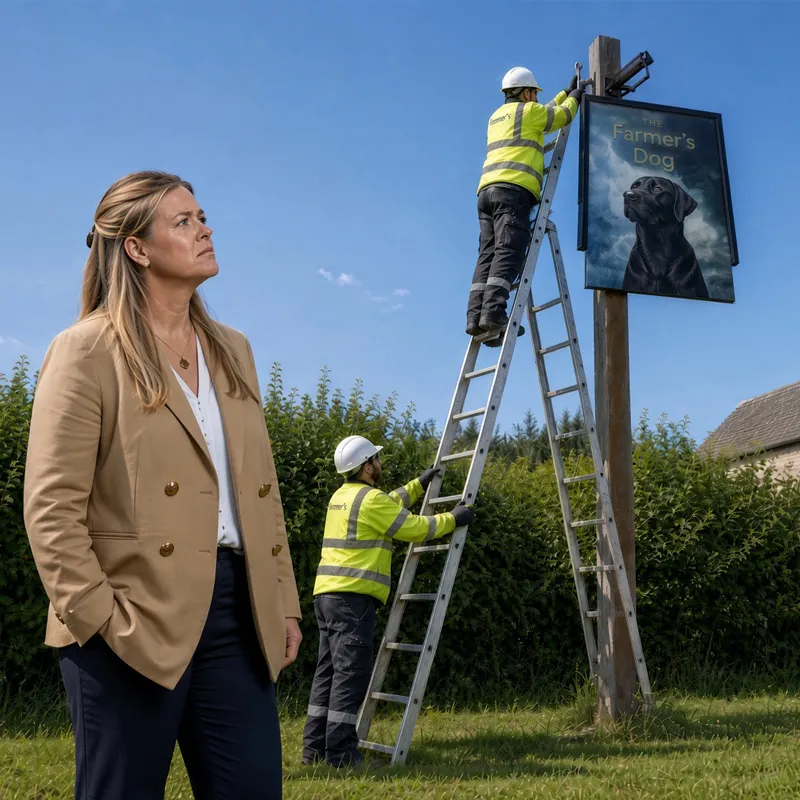
The Farmer’s Dog: the warm ale and black Labrador back door to social collapse.
Correcting England: Right
Suella Braverman, ex-Conservative minister now Reform says she is “categorically not English”, drawing a distinction between an ancestral English identity and a wider civic British identity. We examine what that distinction means, why English ethnicity and English national identity need not be the same thing.
So who gets to be English?
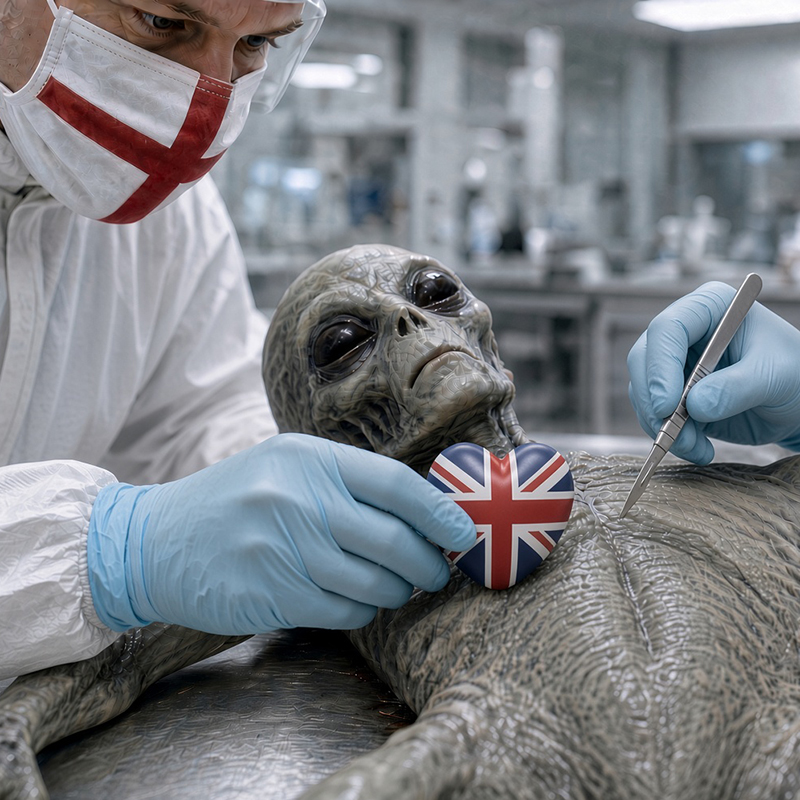
Alien Autopsy: examining Englishmen in New York and other illegal alien identities.
“There is a forgotten, nay, almost a forbidden word, which means more to me than any other. That word is ‘England’.”
Where’s Willy?
Unfortunately, YouTube has age-restricted our search for Willy(s) on the Bayeux Tapestry. There are also some kebabs but only in the sense of Fat Boy Slim and a Norman Cook having a BBQ.
Talking of co#ks, the Bayeux Tapestry was actually produced in Canterbury, Kent, by English gentlewomen stitchers. As an act of defiance against the Norman occupation, the ladies of Kent added unauthorised nude images, including a plethora of willies. Some tumescent and some dangling.
If you’re visiting the Bayeux celebratory display, look out for the naked fella wearing a bobble hat directly beneath Ælfgyva and the cleric. The embroidered, anatomically correct, yellow-tinged todger includes appropriate hair coverage.
But not age-appropriate so you’ll need to sign in to hunt for medieval members. Or go to the British Museum where you’ll be supplied with a Where’s Willy checklist to tick off your kn#b-spotting. As another starter for ten, study the lower border of the frame feat Harold and William.
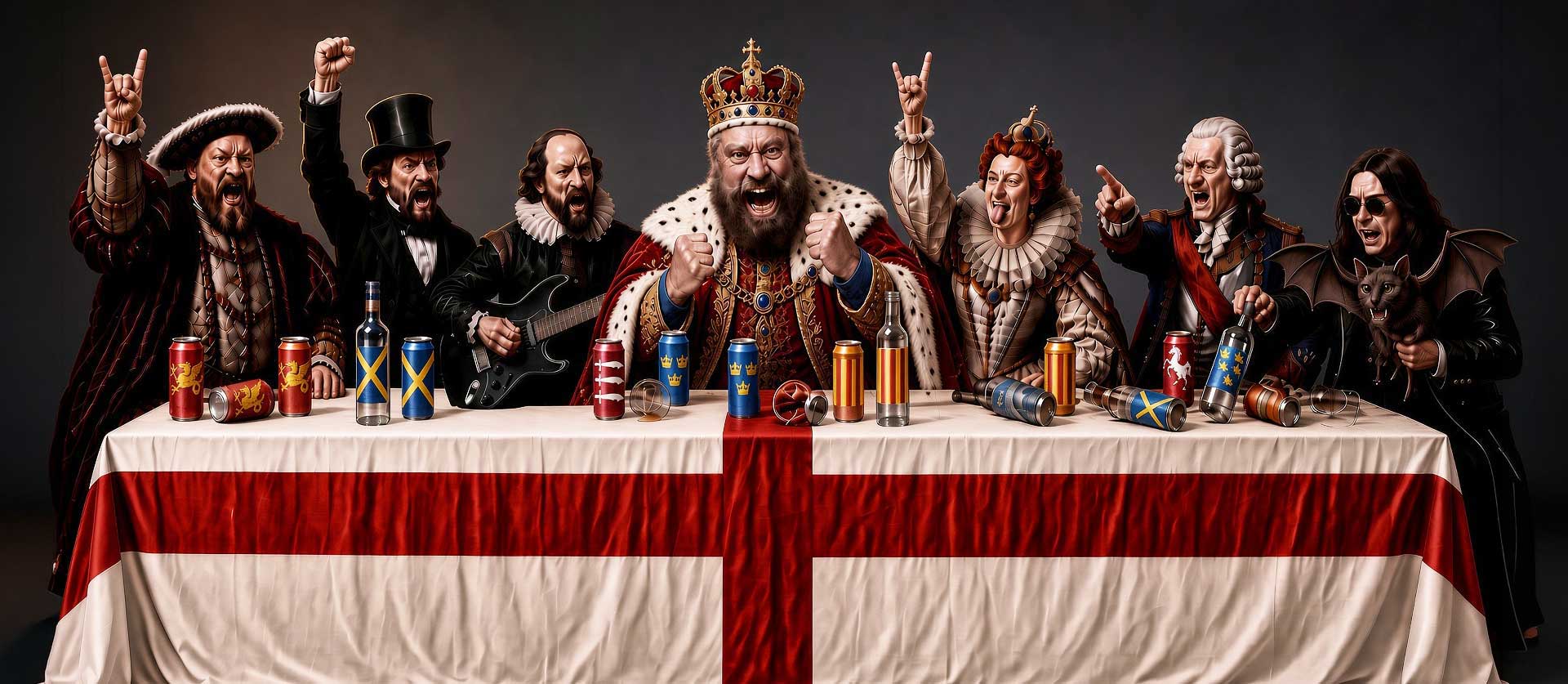
Brian says: ‘Follow @englandism927’

| ENGLANDISM.CO.UK | INTERNAL LINKS |
| ENGLANDISM.CO.UK | EXTERNAL LINKS |
Political Independence
Englandism is an independent, non-party-political initiative. It has no affiliation with, or allegiance to, any political party or political organisation. Its purpose is to encourage informed discussion, historical understanding and civic recognition of England, without promoting any party-political agenda.
Its central objective is to promote equivalence of national recognition for England, Scotland, Wales and Northern Ireland within the United Kingdom, respecting the distinct identities, histories and democratic aspirations of all four nations. This website and associated campaign is entirely self-financed and created and maintained without any external funding or control.
Privacy & Data Protection
Englandism respects visitor privacy and is committed to responsible handling of personal information in accordance with applicable UK data protection legislation. This website uses Google Analytics and Bing Webmaster Tools to understand website usage and improve its content. Where required, consent is requested before non-essential cookies or tracking technologies are used. For further information, please see our Privacy Policy.