The English Question
English Devolution, Democracy and England’s Future
Does the UK Government’s policy of English devolution answer the question?
ENGLANDISM.CO.UK
The English Question: English Devolution, Democracy and England’s Future
What is the English Question, and does the UK Government’s policy of English devolution answer it?
Direct answer: The English Question concerns how England should be governed and represented within a United Kingdom in which Scotland, Wales and Northern Ireland have national devolved institutions, while England does not.
The UK Government’s current approach is principally to devolve powers within England to Strategic Authorities and elected mayors rather than create an England-wide devolved parliament or government.
This page examines how that policy works, how England’s arrangements compare with those of the other UK nations, whether different parts of England could experience different outcomes, and the wider implications for democratic representation.
Last updated: October 2026
Englandism: Follow our continuing analysis of the constitutional future of England, English devolution and the question of who speaks for England.
What is the English Question?
The English Question asks how England should be governed and represented within the devolved United Kingdom.
It developed particular significance following devolution to Scotland, Wales and Northern Ireland. While those nations acquired national devolved institutions, England followed a different constitutional path.
The question encompasses several issues: how England should be governed, whether England requires a distinct political voice, how power should be decentralised within England, and how England should be represented within the institutions of the United Kingdom.
It is broader than the West Lothian Question, which concerns the participation of MPs representing constituencies outside England in Westminster decisions affecting England where equivalent responsibilities are devolved elsewhere.
“To lay down, for my God, and for my kingdom, and for my people, my honour and my blood, even the dust.”
Authoritative background: House of Commons Library: The English Question
Explore Englandism: This page brings together our research into the English Question. Follow the linked analysis throughout this page to examine individual aspects in greater detail.
Does English devolution resolve the West Lothian Question?
Could a hung parliament after the 2029 general election result in a coalition or parliamentary agreement involving SNP MPs, giving Scottish MPs direct influence over UK Government policy on English devolution and the allocation of funding within England?
Yes. The West Lothian Question describes the constitutional anomaly whereby MPs representing Scotland, Wales and Northern Ireland can vote at Westminster on matters affecting England, while English MPs cannot vote on equivalent matters that have been devolved to the Scottish Parliament, Senedd or Northern Ireland Assembly.
Regional devolution within England does not remove this asymmetry. England’s Strategic Authorities and mayors are receiving greater regional powers, but the overall direction, funding framework and legislation governing English devolution remain controlled at Westminster.
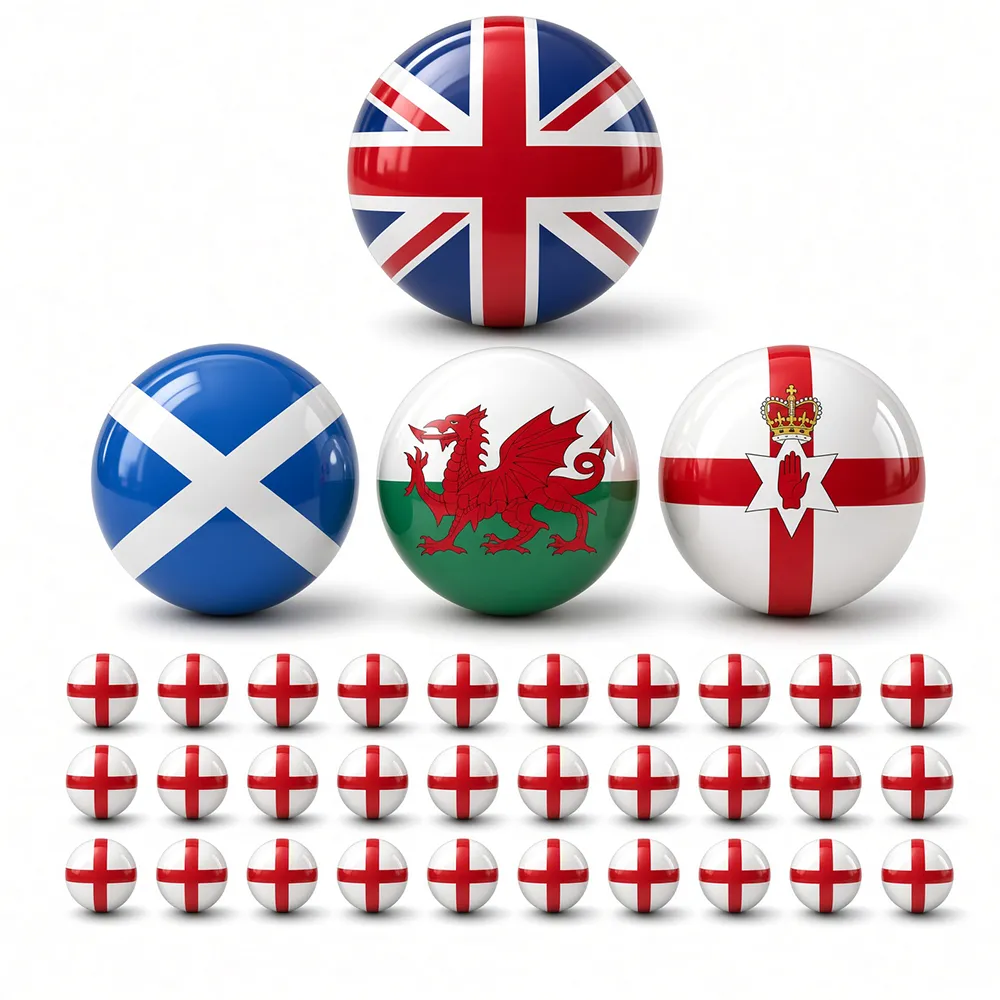
Who speaks for England?
This could become particularly significant in a future hung Parliament. If a UK Government depended upon the support of Scottish MPs, those MPs could potentially influence legislation, funding and government policy determining the future direction of devolution in England, while many equivalent domestic policies in Scotland would remain under the control of Scotland’s own Parliament and Government.
England may be gaining regional devolution, but it is not gaining an England-wide institution controlling the national framework within which that devolution operates.

Your Vote Counts
In 2027, for the first time, you will actually be allowed to vote for who leads your ‘all new’ region.
So far, without consultation or consent, Westminster has slipped in the back door, with 13 new Regional Authorities. Although elected, no one was told what they were actually voting for. This is how the all powerful new Mayor of the West of England was elected with just 7.5% of the popular vote (51,197 electorate 682,951).
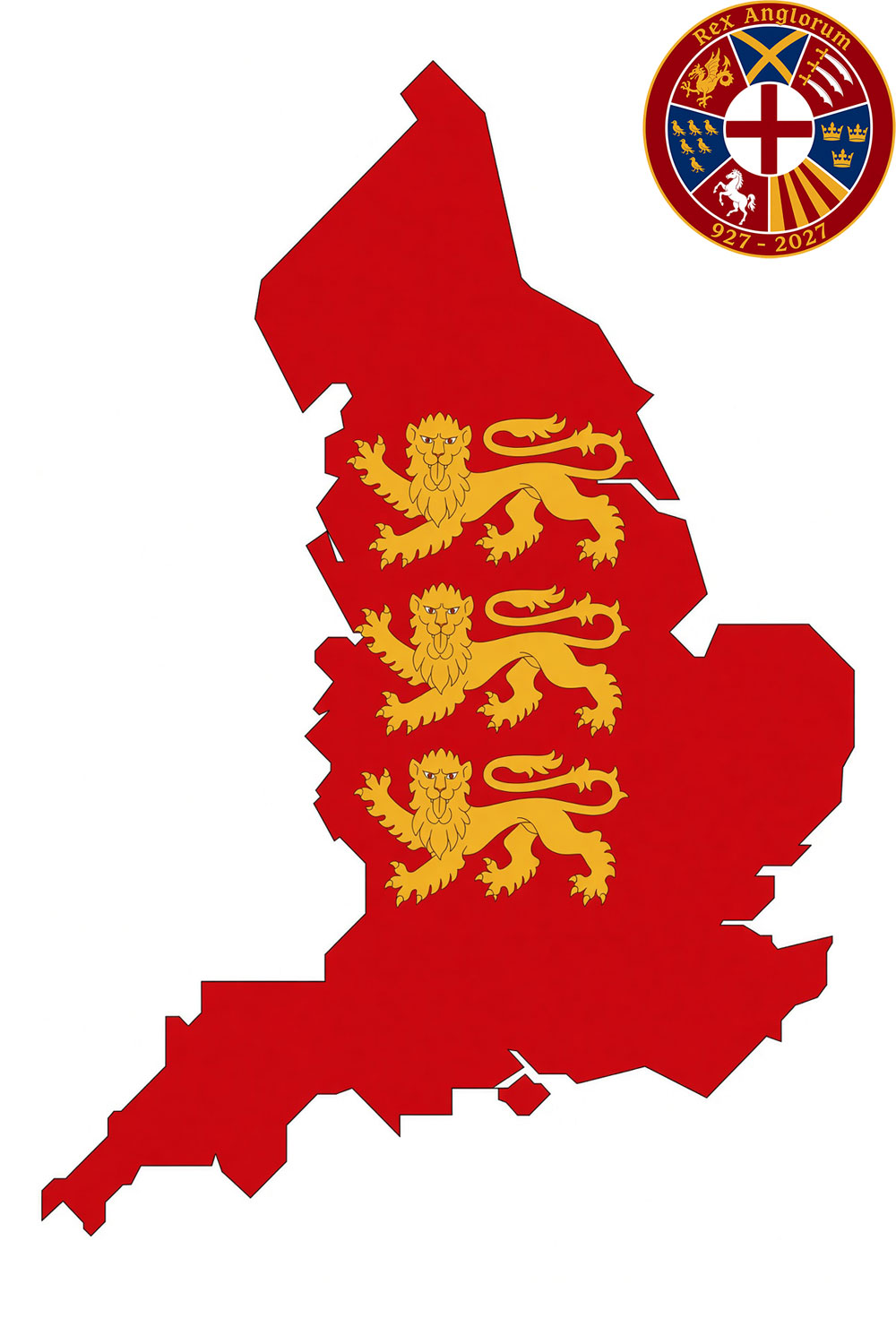
In 927, England was unified at Eamont Bridge, Cumbria, and in May 2027, Cumbria can decide to do it again. By electing a mayor with a mandate for England.
The next elections in 2027 cover Cumbria and Cheshire followed in 2028 by Wessex, Essex, Sussex and East Anglia. You can add your voice to remove Westminster’s direct control from England.
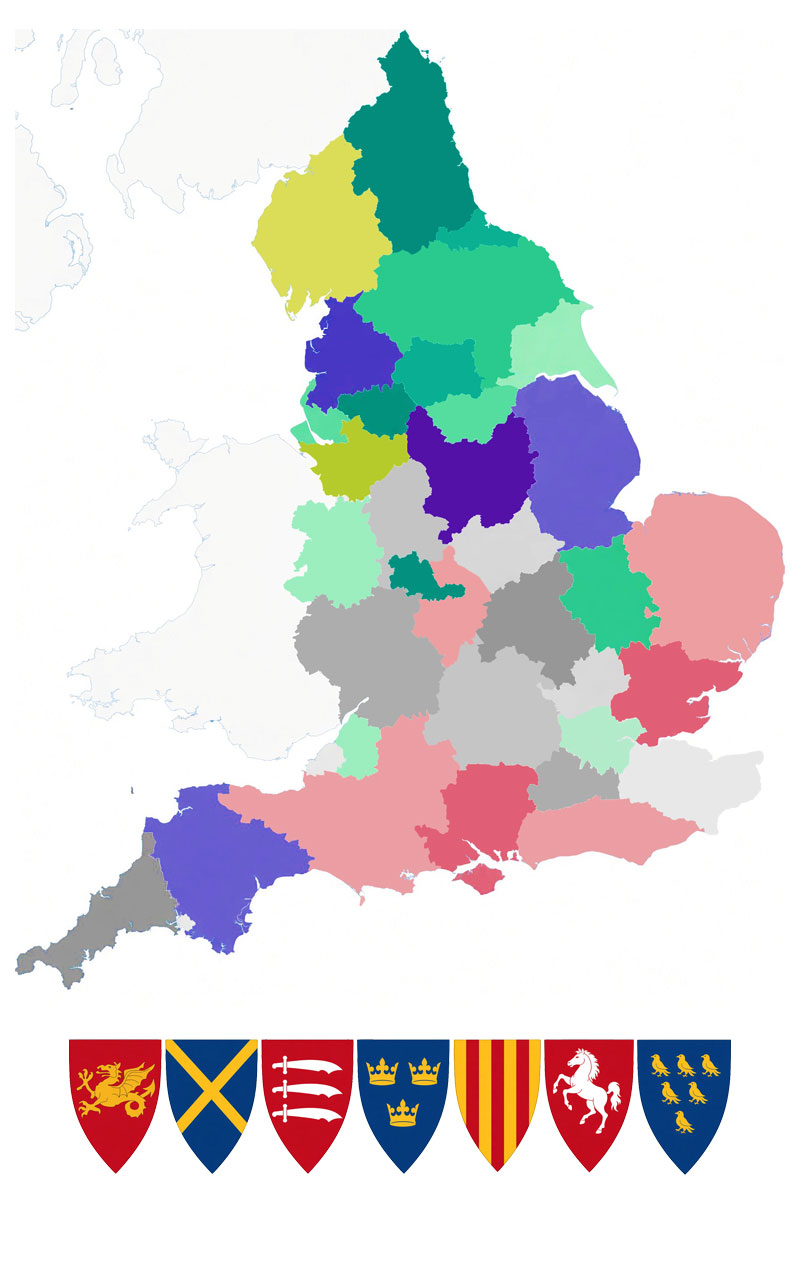

Cumbria Combined County Authority
Cumbria, Cumberland and Westmorland & Furness. Anglo-Saxon Northumbria c.927
Election 6th May 2027
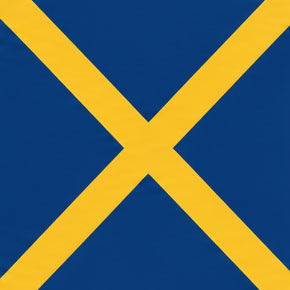
Cheshire & Warrington
Cheshire East, Cheshire West & Chester, and Warrington. Anglo-Saxon Mercia c.927
Election 6th May 2027
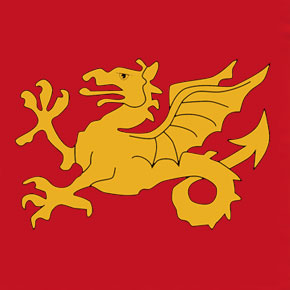
Heart of Wessex
Dorset, Somerset and Wiltshire. Anglo-Saxon Wessex c.927
Election 2028
Hampshire & the Solent
Hampshire, Southampton, Portsmouth and the Isle of Wight. Anglo-Saxon Wessex c.927
Election 2028
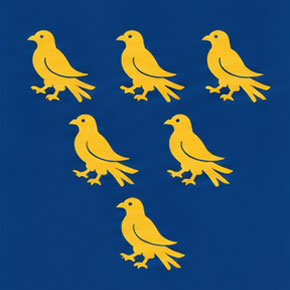
Sussex & Brighton
East Sussex, West Sussex, and Brighton and Hove. Anglo-Saxon Sussex c.927
Election 2028
Greater Essex
Essex, Southend-on-Sea and Thurrock. Anglo-Saxon Essex c.927
Election 2028
Norfolk & Suffolk
Norfolk and Suffolk Mayoral Combined County Authority. Anglo-Saxon East Anglia c.927
Election 2028
Be careful what you wish for? The Heart of Wessex Mayoral Strategic Authority, was formally endorsed on 28th October 2026. The Kingdom of Wessex founded England in 927 at Eamont Bridge, Cumbria. In England’s 1,100th year, not only has Wessex ‘reformed’ but the next mayoral election will be at Eamont Bridge (Cumbria). READ MORE

The Elephant in the Toybox: England is 85% of the population and creates 86% of public revenue.
The Memorandum of Understanding (Cardiff Agreement)
“The United Kingdom in its current form is unjust and unsustainable.” September 2026.
John Swinney, First Minister of Scotland, Rhun ap Iorwerth, First Minister of Wales, Michelle O’Neill, First Minister of Northern Ireland.
“Westminster’s time is coming to an end”. As of September 2026, Scotland, Wales and Northern Ireland have decided that the UK is no longer viable. England was bypassed in the discussions because England is Westminster, England is the UK Government, except when it isn’t. The “unjust and unsustainable” UK arrangements may have been a reference to England financing the UK (86%), receiving the least meaningful per capita outcome and having no national political representation.
How is England different from Scotland, Wales and Northern Ireland?
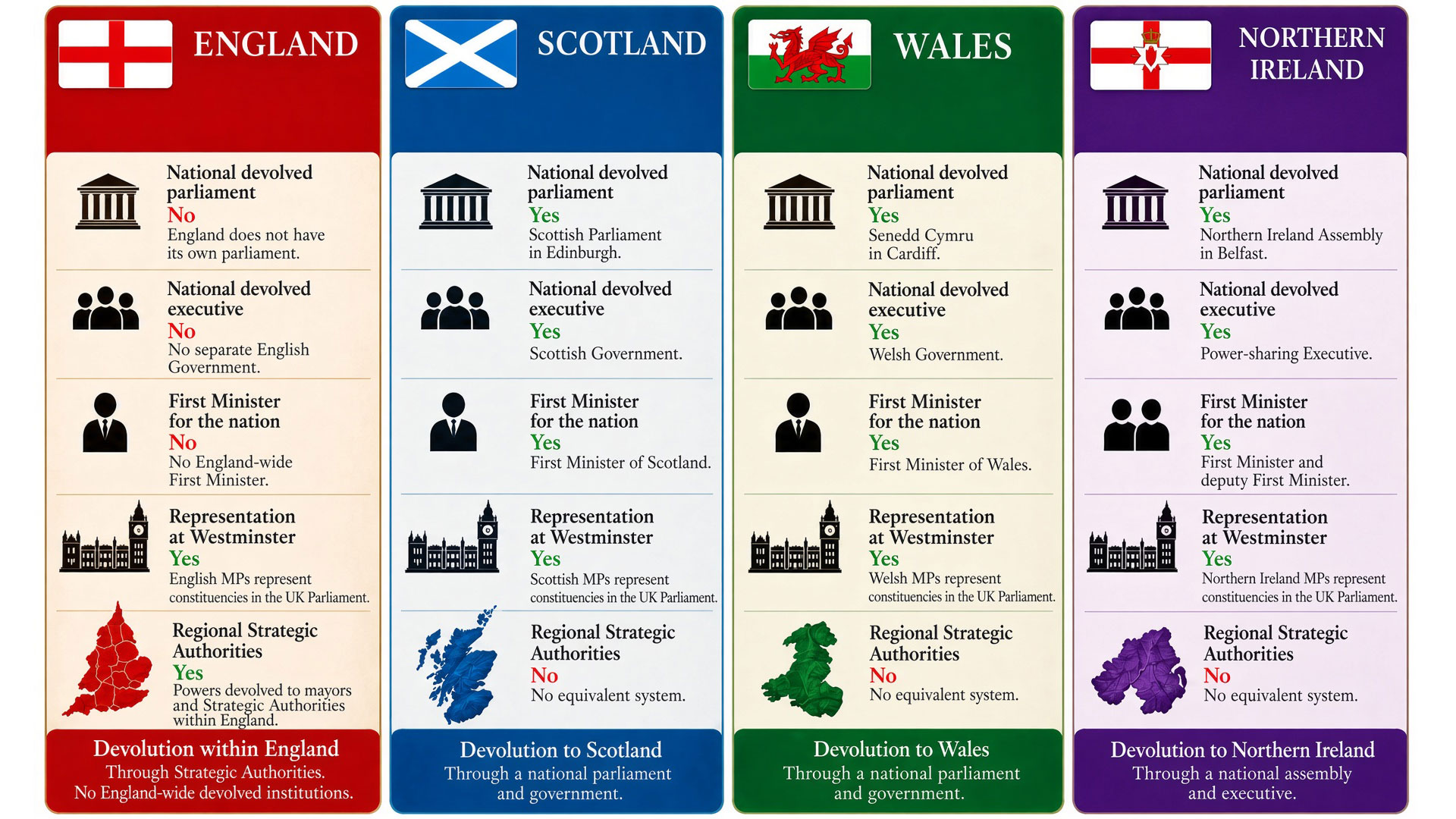
The United Kingdom has an asymmetrical system of devolution. Scotland, Wales and Northern Ireland have national devolved institutions. England instead combines UK-level government with increasingly extensive sub-national devolution.
| Institution | England | Scotland | Wales | Northern Ireland |
|---|---|---|---|---|
| National devolved legislature | No | Yes | Yes | Yes |
| National devolved executive | No | Yes | Yes | Yes |
| First Minister for the nation | No | Yes | Yes | Power-sharing First Minister and deputy First Minister |
| Representation at Westminster | Yes | Yes | Yes | Yes |
| Regional Strategic Authorities | Yes | No equivalent system | No equivalent system | No equivalent system |
The distinction is therefore not simply about the number of representatives or institutions. It concerns where political authority is located and the geographical level at which devolved democratic mandates operate.
Englandism question: If the other three UK nations possess national devolved institutions, how will England be represented within an increasingly devolved United Kingdom? By Andy Burnham?
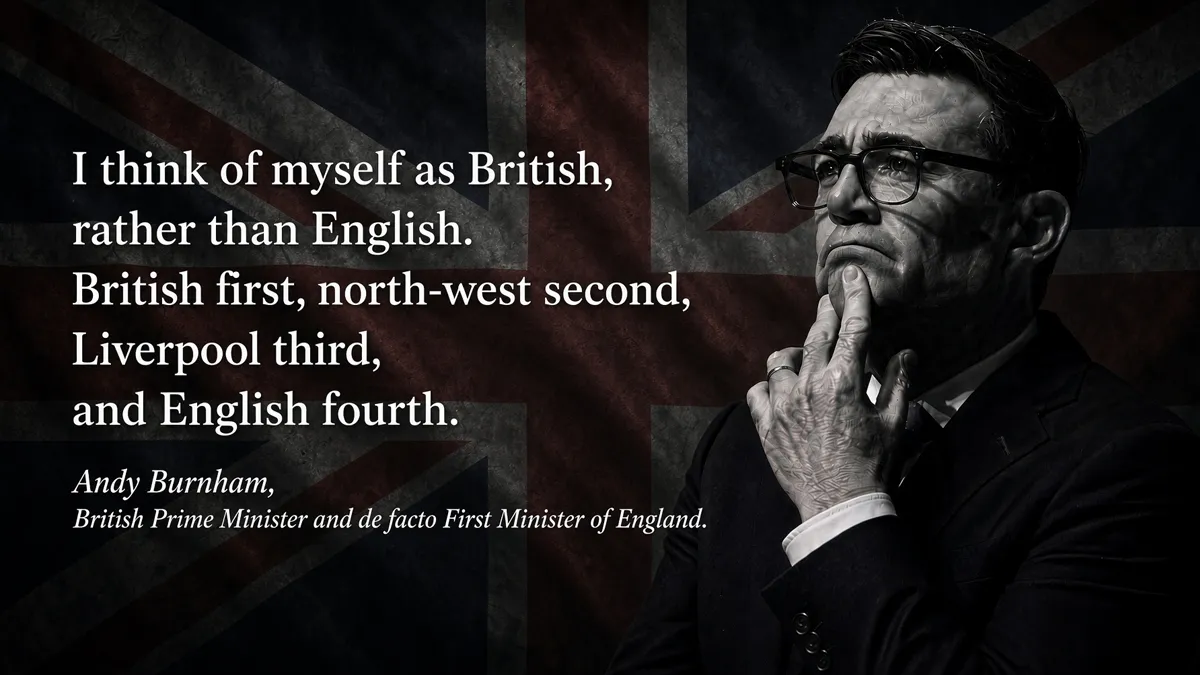
Sources: Parliamentary evidence — June 4th 2018. Commons Public Administration and Constitutional Affairs Committee. Direct quote in official transcript (761): “I consider myself British, not English first and foremost.”
“In an interview with the New Statesman (Tom McTague, New Statesman), he said his identity was layered: British first, north-west second, Liverpool third, and English fourth.” Jason Cowley, “The Burnham Wager” — July 11th 2026.
UK Constitutional Comparison
A graphic illustrating the differences between the four constituent nations of the United Kingdom in terms of devolved power and democratic representation.
The English Question asks if England should have an equivalent, distinct, national voice?
How Does England Compare? Measuring the Democratic Deficit
The constitutional position of England becomes particularly clear when compared with the other nations of the UK and with regional governments internationally.
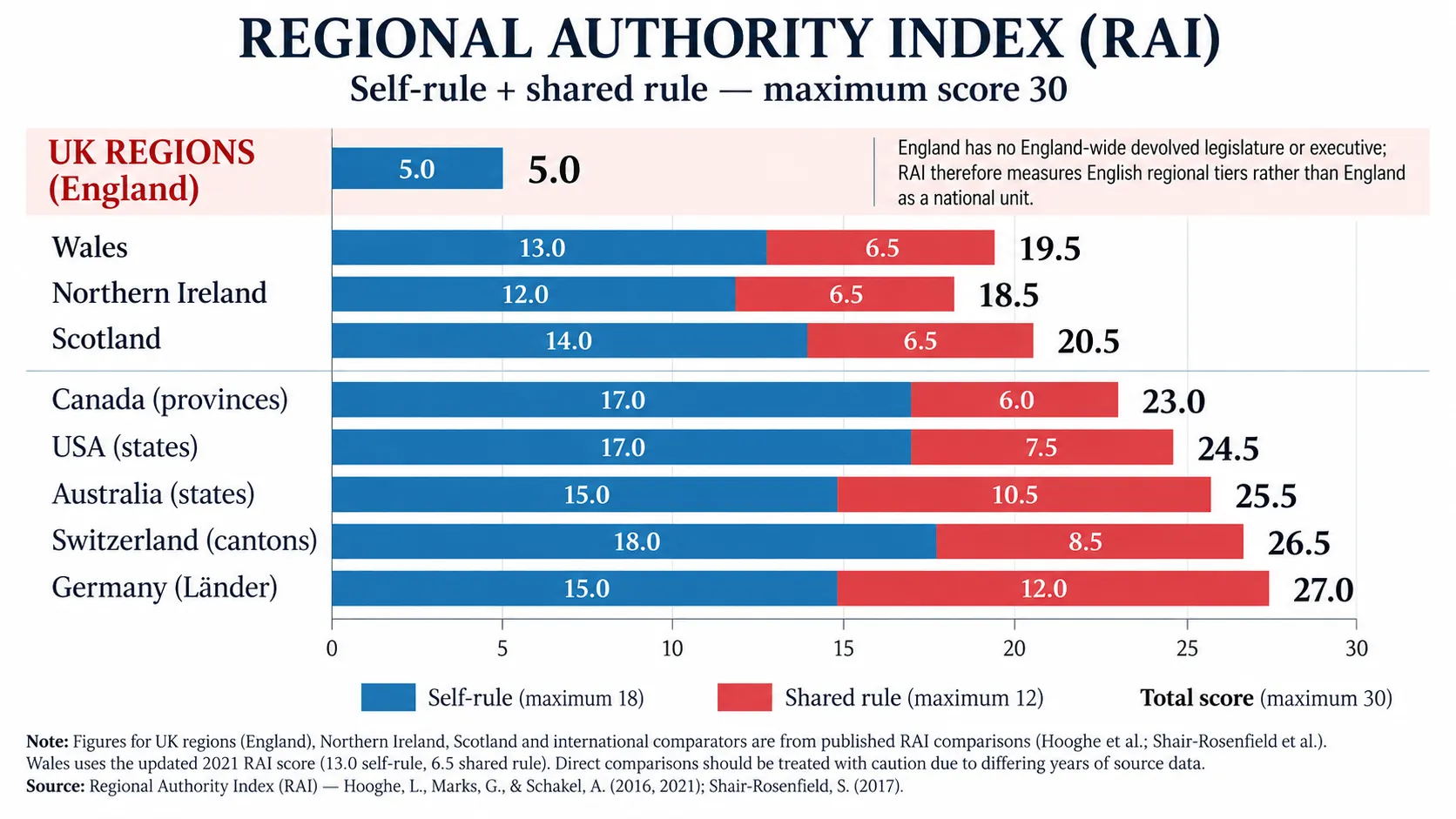
The Regional Authority Index (RAI) measures the authority exercised by subnational governments through two broad concepts: self-rule, the ability of a territory to govern itself, and shared rule, its ability to participate in governing the state as a whole.
England presents an unusual case. Scotland, Wales and Northern Ireland have their own national devolved legislatures and executives; England does not. The RAI therefore measures English regional structures rather than England as a single national political unit. The comparison below shows the resulting difference in institutional authority.
What is the UK Government’s policy for English devolution?
The Government’s policy is to transfer greater powers from Westminster and Whitehall to Strategic Authorities across England.

The English Devolution White Paper: Power and Partnership – Foundations for Growth, published in December 2024, set an objective of universal Strategic Authority coverage across England and proposed a more standardised framework for transferring powers.
These reforms subsequently formed the basis of the English Devolution and Community Empowerment Act 2026.
The Government argues that devolution can move decision-making closer to communities, support economic growth, integrate public services and give local leaders greater responsibility.
Primary sources:
Read the English Devolution White Paper
Read the English Devolution and Community Empowerment Act 2026
Englandism: We are tracking how these reforms affect England’s regions and the constitutional position of England itself.
UK Government’s Policy Towards English Identity
Englishness, English history and English national identity.
What are Strategic Authorities?
Strategic Authorities are institutions covering areas larger than individual councils through which significant elements of English devolution are being delivered.
The framework provides different levels of governance and devolution, with the greatest range of powers associated with established mayoral authorities.
| Model | Governance | Devolution position |
|---|---|---|
| Foundation Strategic Authority | Non-mayoral model available | Foundation level |
| Mayoral Strategic Authority | Directly elected mayor | Greater devolved powers |
| Established Mayoral Strategic Authority | Established mayoral governance | Most developed devolution arrangements |
The important constitutional distinction is that Strategic Authorities represent parts of England. They do not collectively constitute a devolved government for England.
Englandism will track each Strategic Authority, including its boundaries, mayor, powers, democratic mandate and level of devolution.
Devolution to England or devolution within England?
Understanding the difference between devolution to England and devolution within England is central to understanding the English Question.
Scotland, Wales and Northern Ireland principally received devolution through institutions representing their respective nations.
England’s current settlement principally transfers powers from central government to institutions representing areas within England.
England increasingly has devolution. What it does not have is an England-wide devolved parliament or government equivalent to the national institutions established elsewhere in the UK.
Regional devolution and national representation are therefore related but separate constitutional questions.
Cumbria Combined County Authority
Cumbria, Cumberland and Westmorland & Furness. Anglo-Saxon Northumbria c.927
Election 6th May 2027
Cheshire & Warrington
Cheshire East, Cheshire West & Chester, and Warrington. Anglo-Saxon Mercia c.927
Election 6th May 2027
Heart of Wessex
Dorset, Somerset and Wiltshire. Anglo-Saxon Wessex c.927
Election 2028
Hampshire & the Solent
Hampshire, Southampton, Portsmouth and the Isle of Wight. Anglo-Saxon Wessex c.927
Election 2028
Sussex & Brighton
East Sussex, West Sussex, and Brighton and Hove. Anglo-Saxon Sussex c.927
Election 2028
Greater Essex
Essex, Southend-on-Sea and Thurrock. Anglo-Saxon Essex c.927
Election 2028
Norfolk & Suffolk
Norfolk and Suffolk Mayoral Combined County Authority. Anglo-Saxon East Anglia c.927
Election 2028
Explore the question with Englandism: Does decentralising England into Strategic Authorities provide an answer to the English Question, or does the question of national representation remain unresolved?
Was English regional devolution ever voted for?
England was not asked. Scotland, Wales and Northern Ireland were.
Who speaks for England?
There is no single devolved institution with a democratic mandate to represent England as a whole.
The UK Government governs UK-wide matters while also administering many domestic responsibilities specifically for England. Westminster represents the entire United Kingdom. English mayors and Strategic Authorities represent particular English territories.
The Mayoral Council provides a mechanism for engagement between central government and English mayors, but its members hold mandates from their individual mayoral areas.
This produces one of the central questions explored by Englandism:
If Scotland, Wales and Northern Ireland can articulate positions through national devolved institutions, through what institution can England express an England-wide position?
Could English Devolution Create a Two-Tier England?
Yes, it could. England’s new devolution system does not give every part of England the same powers.
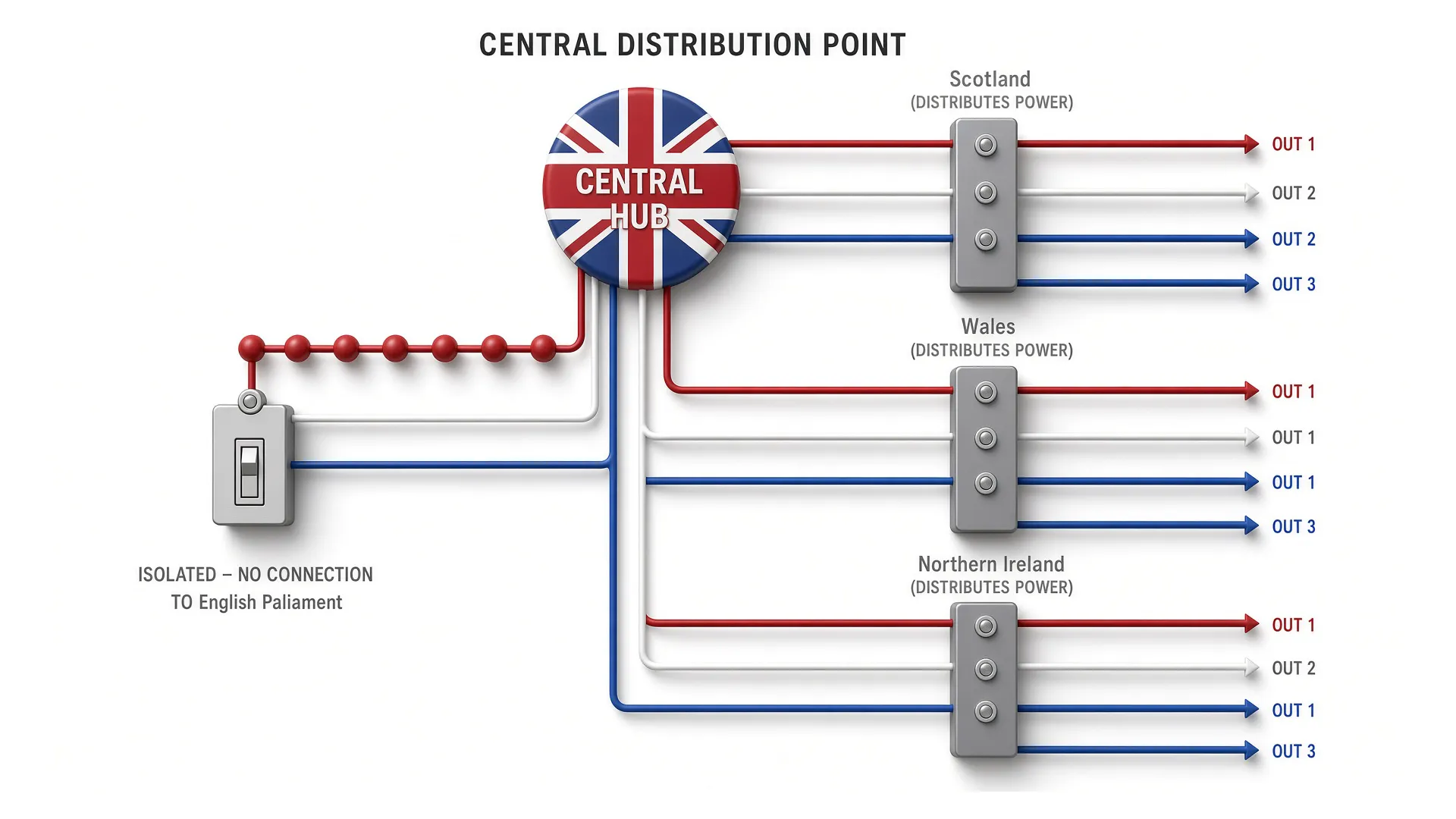
Rewiring the UK – Where does England plug in?
The missing connection is an institution representing England as a whole rather than creating competing ‘strategic’ regions AKA Divide & Rule.

Labour Conference fringe event. Howard Dawber, speaking for Greater London Authority. Confirms Whitehall ‘opposition’ and two tier devolution.
Is Whitehall resisting English devolution?
New remarks from Labour Party Conference suggest that, despite the Government’s commitment to devolving more power to England’s mayors and Strategic Authorities, parts of Whitehall may remain reluctant to surrender central control.
Speaking at a Labour Conference fringe event, London’s Deputy Mayor for Business, Howard Dawber, described the Government’s approach to devolution as a fundamental change, saying:
“This is a government that has devolution as its operating system.”
However, Dawber said some Whitehall departments were still considering central assurance programmes and performance measures for responsibilities transferred to regional government.
He characterised the implication as:
“We don’t trust you to spend the money… That’s not devolution.”
Dawber also revealed that a previous request from London for additional powers had been rejected by the former government because the matter was considered “too important to devolve”. According to Dawber, that decision has subsequently been reversed.
Could English devolution be different in different regions?
Dawber also suggested London’s devolution arrangements may need to differ from those elsewhere, describing the Greater London Authority as a “very different animal to the other mayoral authorities.”
This is significant because the Government is developing a system of Strategic Authorities across England, but the powers, financial resources and institutional arrangements available to individual areas may not necessarily be identical.
How does this relate to “rewiring” the UK?
Prime Minister Andy Burnham has said his Government intends to “rewire” the United Kingdom by moving power out of Whitehall and closer to people and places.
The latest remarks expose an important tension within that process: ministers and mayors may favour substantial devolution while parts of the central government machinery continue to favour Whitehall oversight.
For England, another constitutional question remains. The Government’s developing model connects England to the UK’s new constitutional structure primarily through regional mayors and Strategic Authorities, rather than through an England-wide national institution.
Further reading:
- Greater London Authority
- English Devolution White Paper – GOV.UK
- Englandism – English devolution and the English Question
Updated: 30 September 2026.
FAQs
Frequently asked questions about the English Question
What is the English Question?
The English Question concerns how England should be governed and represented within the United Kingdom following devolution to Scotland, Wales and Northern Ireland.
Does England have its own parliament?
No. England does not have a separate national parliament. England-specific legislation in non-devolved areas is made through the UK Parliament.
Does England have its own government?
No separate English Government exists. The UK Government also administers many domestic responsibilities specifically for England.
Does England have devolution?
Yes. Powers are increasingly devolved to English mayors and Strategic Authorities. This is principally devolution within England rather than to a single England-wide institution.
Who speaks for England?
No single devolved institution possesses an England-wide democratic mandate. Westminster, UK Government departments, local government, mayors and Strategic Authorities perform different roles in England’s governance.
Are all parts of England receiving the same devolved powers?
Not necessarily. Powers and governance arrangements can differ according to an area’s devolution status and institutional model.
Is English devolution the same as Scottish devolution?
No. Scotland’s devolution operates through a national Parliament and Government. English devolution principally transfers responsibilities to sub-national institutions within England.
What is the West Lothian Question?
The West Lothian Question concerns the participation of MPs from outside England in Westminster decisions affecting England where equivalent responsibilities are devolved elsewhere in the UK.
Did England vote for regional devolution?
There has been no England-wide referendum approving the current Strategic Authority system. In the 2004 North East referendum, voters rejected the then-proposed elected regional assembly by 77.9% to 22.1%.
Does regional devolution solve the English Question?
Regional devolution addresses the decentralisation of power within England. Whether England should also have an England-wide form of political representation remains a separate constitutional question.
How Old Is the United Kingdom?
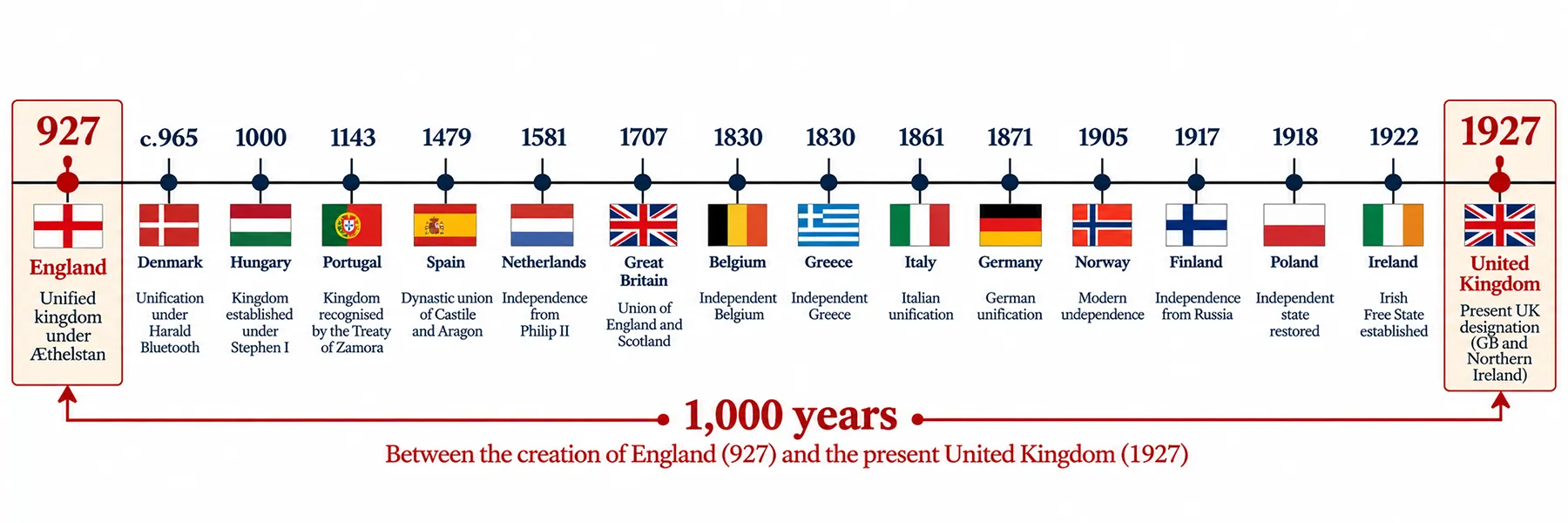
The United Kingdom of Great Britain and Northern Ireland, dates from 12 April 1927. England itself is much older, with the unified Kingdom of England conventionally dating to 927. Explore the details…
2027: 1100 Years of England
One thousand years older than the United Kingdom of Great Britain and Northern Ireland.
Primary sources and further reading
- UK Government — English Devolution White Paper
- English Devolution and Community Empowerment Act 2026
- Council of the Nations and Regions — Terms of Reference
- House of Commons Library — The English Question
Follow the future of England
England’s system of government is changing.
Englandism is documenting the development of English devolution, Strategic Authorities, regional mayors and the wider constitutional debate about England’s representation within the United Kingdom.
Explore our latest analysis, share this resource and return as the English devolution settlement develops. And, hopefully, enjoy the bank holiday on Monday 12th July 2027.
Englandism News Articles
As it happens, and doesn’t happen on the coundown to July 12th 2027. We will be, fully, exploring England’s democratic deficit. As our cousins across the sea once said: No taxation without representation.
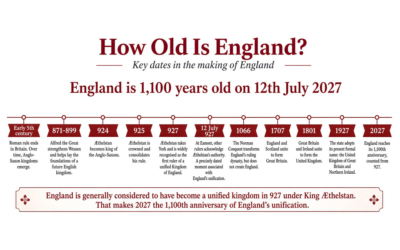
How Old Is England? When Was England Founded?
England is generally considered to have become a unified kingdom in 927 AD, under King Æthelstan....
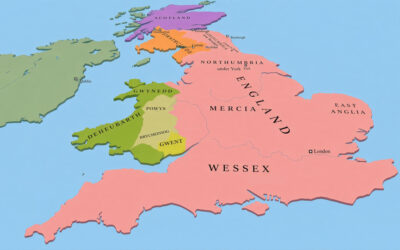
We’re Back! The Only Way is Wessex
The Only Way is Wessex. We're back and it's official, as of 28th October 2026 Wessex rides again....

The Curse of the Mummy versus Yorkshire Puddings
A three thousand year old Egyptian mummy must now have its privacy protected, its burial wishes...

Proclaiming Scotland’s World Cup bank holiday (for turning up)
A paradox: Scotland was granted an additional national bank holiday on Monday 15 June 2026 to mark...
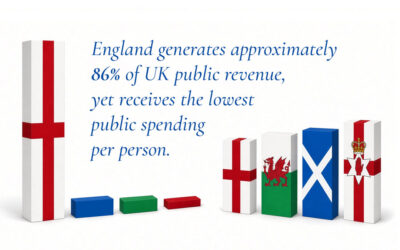
Westminster’s Time Is Ending — But Who Speaks for the Nation That Pays Most of Its Bills?
The Cardiff memorandum calls for Scotland, Wales and Ireland to determine their constitutional...

A New Runnymede? How English Devolution Could Unintentionally Lead to an English Parliament
Could the Government's own devolution reforms create a collective demand for English...
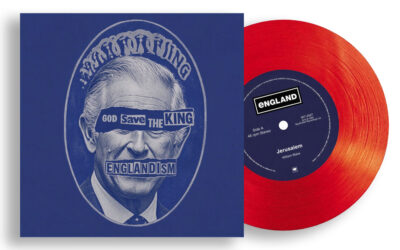
FOE (Fear of England) God Save the King versus Jerusalem
“That does not mean that we should fear recognising England as an entity” — Toby Perkins MP, House...
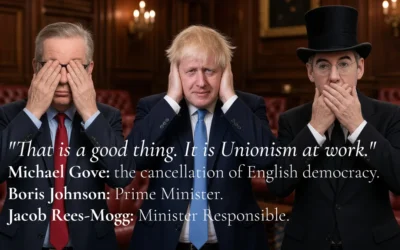
The British State and English National Identity: see no EVEL.
Why can Britain celebrate English history and culture while resisting the creation of distinct...
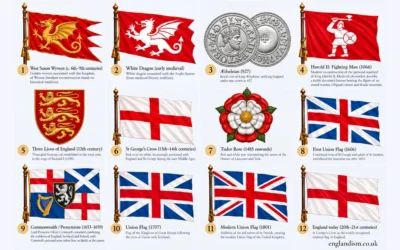
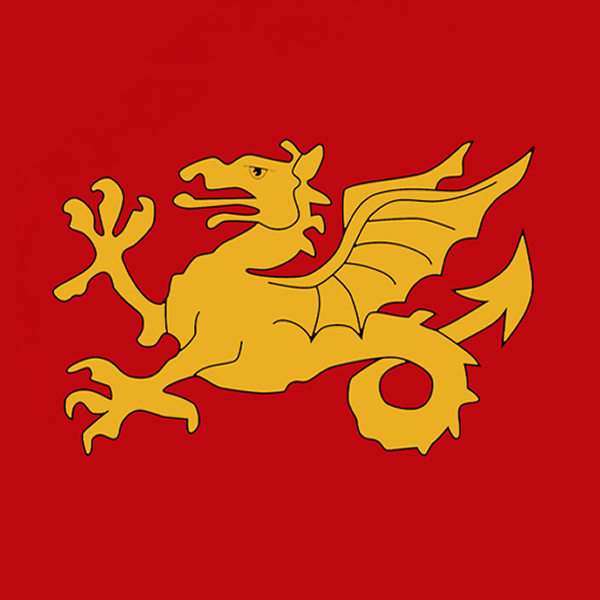
English Flags & Symbols from Wessex to St George’s Cross
The Evolution of English Flags and Symbols: From Wessex to St George’s Cross England’s flags and...

English Heritage Celebrates 960 Years Since the Norman Conquest — But What About England’s 1,100th Anniversary?
10 October 2026 | Englandism News English Heritage is marking the 960th anniversary of the Battle...
England Day 2027: Could Celebrating England’s Unification Cause Offence Across the United Kingdom?
As England approaches the 1,100th anniversary of its unification under King Æthelstan, could a...
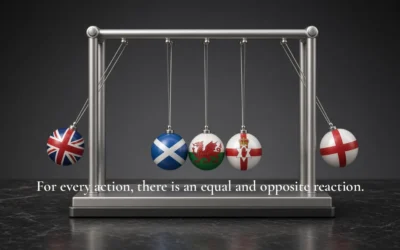
Is British now the officially approved English identity?
A revealing argument about English identity has emerged in British politics. At its heart is a...
Political Independence
Englandism is an independent, non-party-political initiative. It has no affiliation with, or allegiance to, any political party or political organisation. Its purpose is to encourage informed discussion, historical understanding and civic recognition of England, without promoting any party-political agenda.
Its central objective is to promote equivalence of national recognition for England, Scotland, Wales and Northern Ireland within the United Kingdom, respecting the distinct identities, histories and democratic aspirations of all four nations. This website and associated campaign is entirely self-financed and created and maintained without any external funding or control.
Privacy & Data Protection
Englandism respects visitor privacy and is committed to responsible handling of personal information in accordance with applicable UK data protection legislation. This website uses Google Analytics and Bing Webmaster Tools to understand website usage and improve its content. Where required, consent is requested before non-essential cookies or tracking technologies are used. For further information, please see our Privacy Policy.