The Evolution of English Flags and Symbols: From Wessex to St George’s Cross
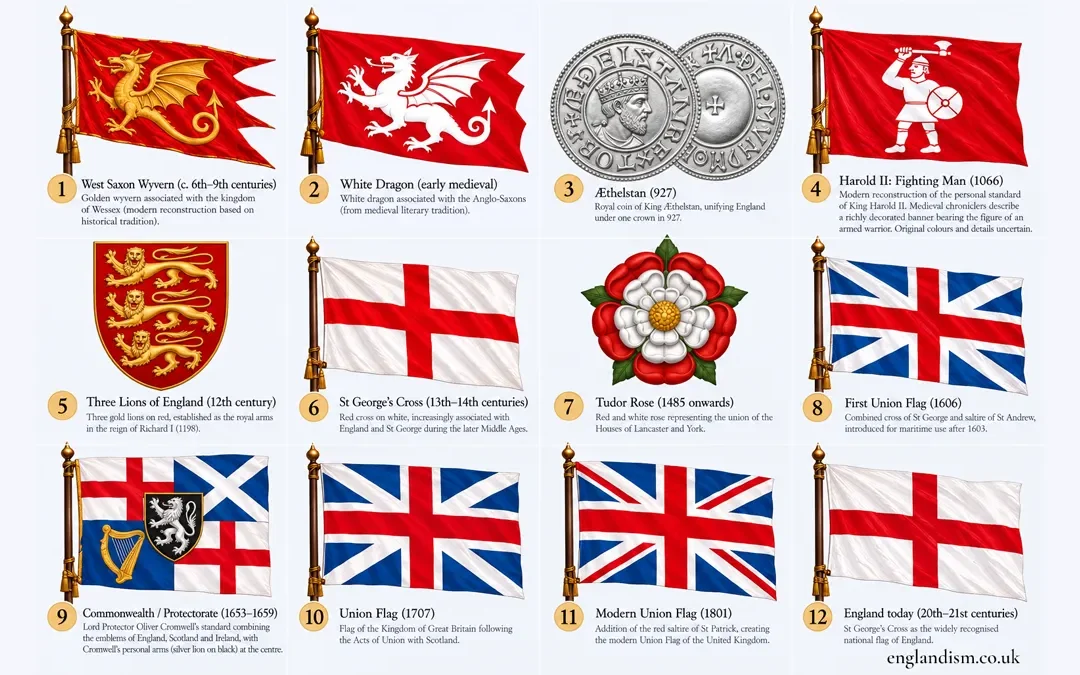
England’s flags and emblems did not emerge together or at a single moment. Over more than a thousand years, royal badges, battlefield standards, religious crosses and political union flags acquired different meanings. Some are documented historical designs; others are later reconstructions or modern symbols inspired by medieval traditions.
England’s unification under King Æthelstan in 927 is an important landmark in this story, but there is no reliable evidence for a single national flag flown throughout his kingdom. The following twelve illustrations distinguish historical evidence from later interpretation.
1. The West Saxon Wyvern — a symbol of Wessex
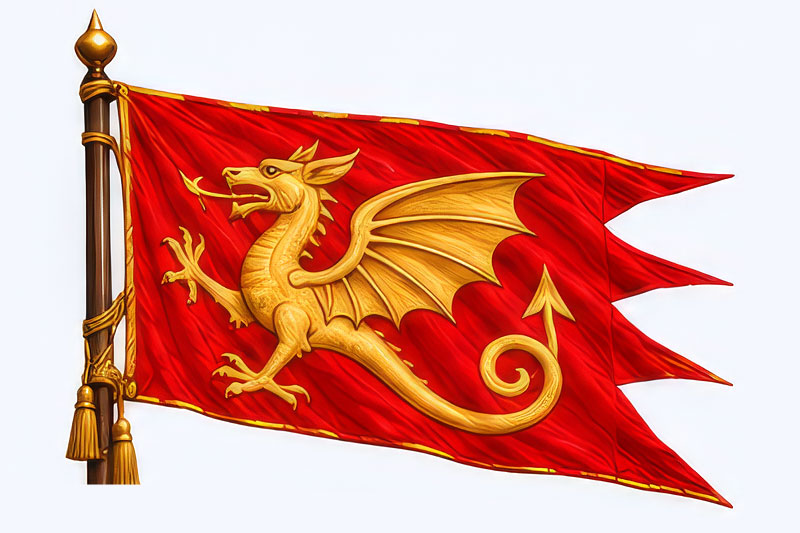
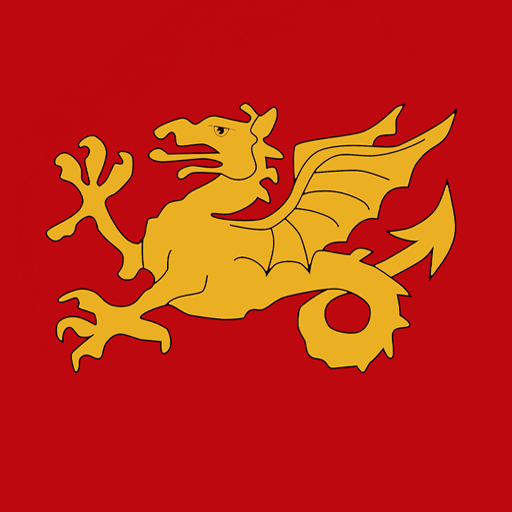
The golden wyvern has become a familiar emblem of Wessex. Its modern flag form draws on traditions linking dragons with West Saxon kingship.
2. The The Four-Legged White Dragon — a literary symbol of the Saxons
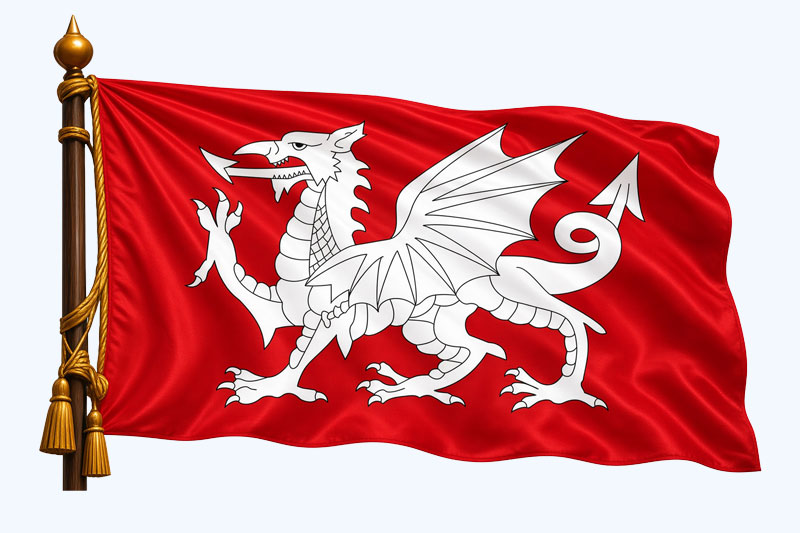
In the Historia Brittonum, traditionally dated to the ninth century, the struggle between a red and a white dragon symbolises conflict between the Britons and the Saxons. The story is evidence of a literary tradition, not proof that Anglo-Saxon armies flew this particular flag. The illustration deliberately shows four legs and two wings, distinguishing this dragon from the two-legged Wessex wyvern.
3. Æthelstan and the Kingdom of England — 927
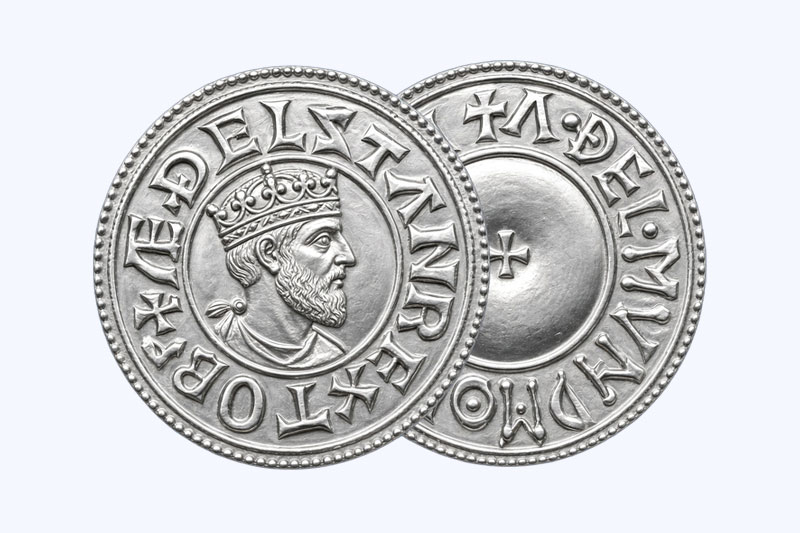
In 927, Æthelstan took York and extended his rule over the territory conventionally associated with the first unified Kingdom of England. His coins and royal titles provide more dependable evidence of his authority than any proposed national flag of the period. Read more in England in 927.
4. Harold II’s Fighting Man Standard — 1066
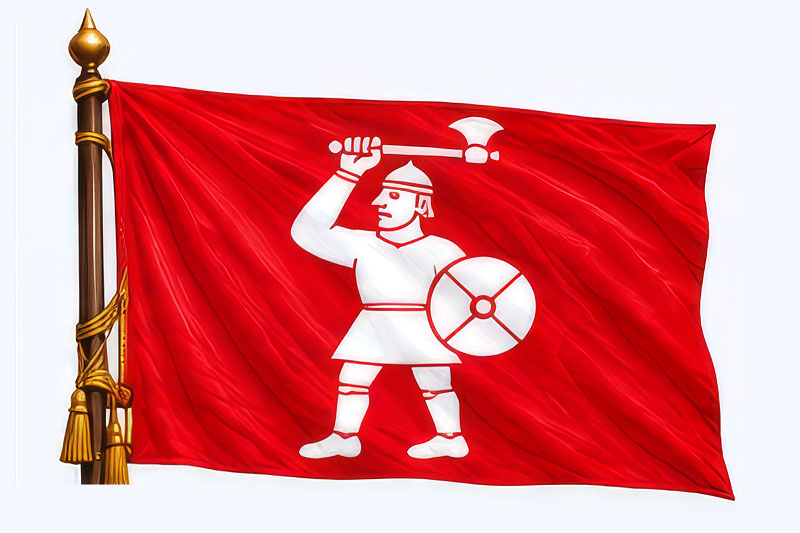
Medieval chroniclers described Harold’s standard as bearing an armed or fighting man, richly worked in gold. The exact composition and colours have not survived. This illustration follows a modern red-and-white reconstruction supplied for the article; it should not be mistaken for a contemporary surviving image. Dragon-shaped standards are a separate feature of the imagery associated with Hastings.
5. The Three Lions — royal arms from the late twelfth century
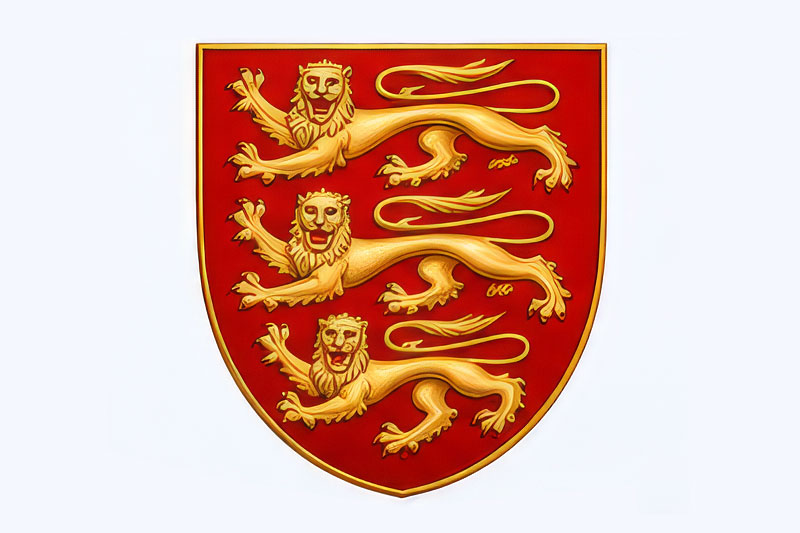
The three lions became one of England’s most enduring royal emblems. They represented the monarchy rather than a modern national flag, but later acquired a wider identity in English sport and public life.
6. St George’s Cross — medieval England
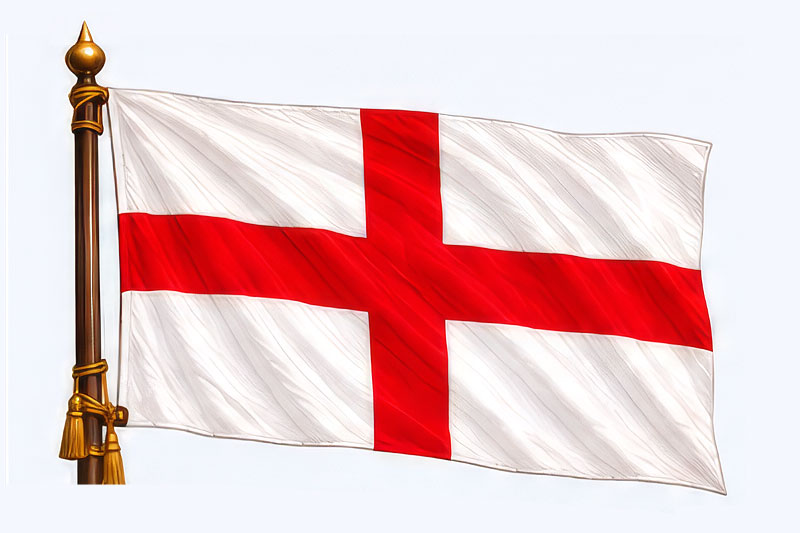
The Cross of St George gained prominence in English military and religious contexts during the thirteenth and fourteenth centuries. Its use as a national emblem developed gradually rather than beginning on one precisely documented date.
7. The Tudor Rose — from 1485
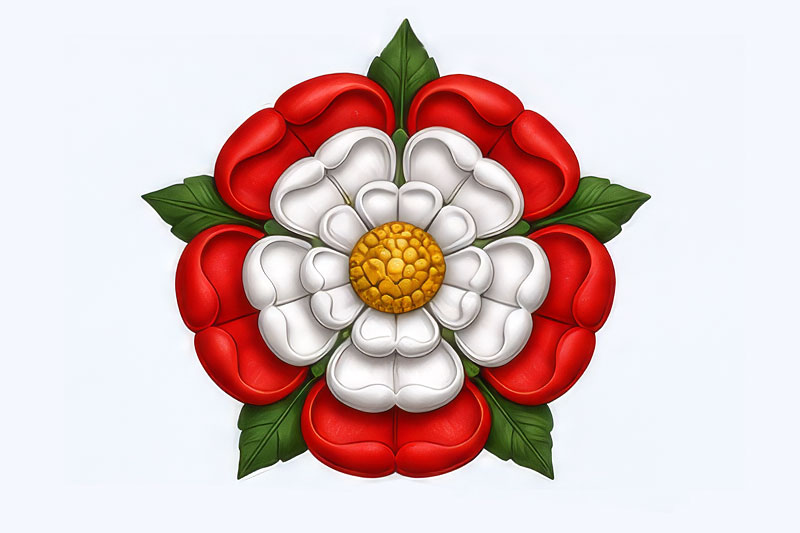
After Henry VII’s accession in 1485, the Tudor Rose became a powerful dynastic symbol. Unlike St George’s Cross, it was not principally a national flag.
8. The First Union Flag — 1606
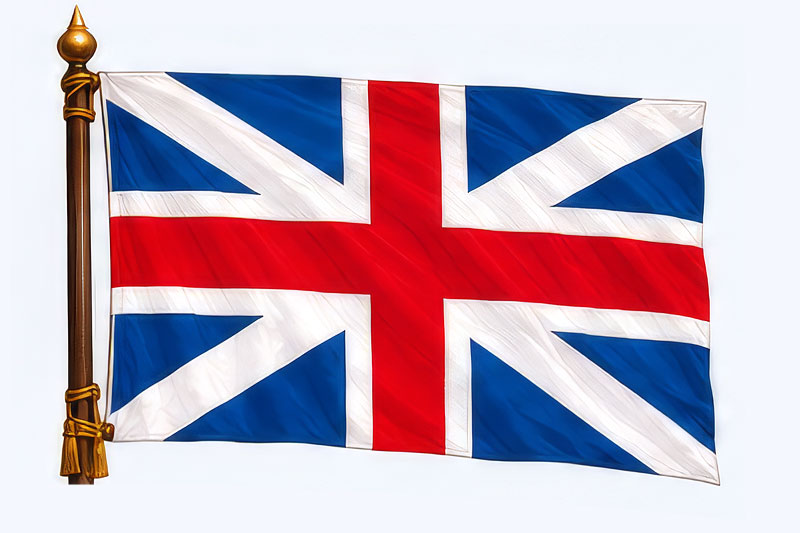
James VI of Scotland inherited the English throne in 1603. In 1606, a combined flag was introduced for maritime use. England and Scotland nevertheless remained separate kingdoms until 1707.
9. The Lord Protector’s Standard — 1653–1659
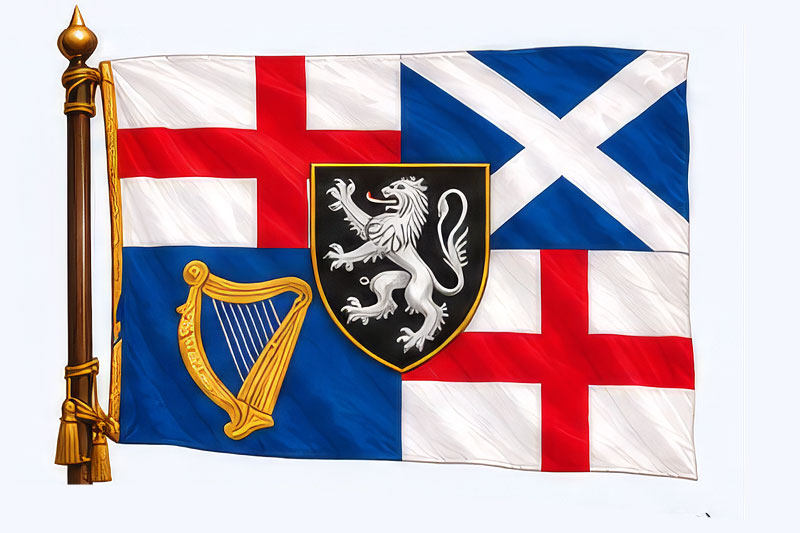
During the Commonwealth and Protectorate, different flags were used for different functions. Cromwell’s personal standard combined the emblems of England, Scotland and Ireland with his own arms. It should not be confused with the simpler Commonwealth naval flags used at other dates.
10. The Union Flag and Great Britain — 1707
The Acts of Union joined England and Scotland into one kingdom. The flag associated with that union had already been introduced in 1606; it was not an entirely new design invented in 1707.
11. The Modern Union Flag — 1801
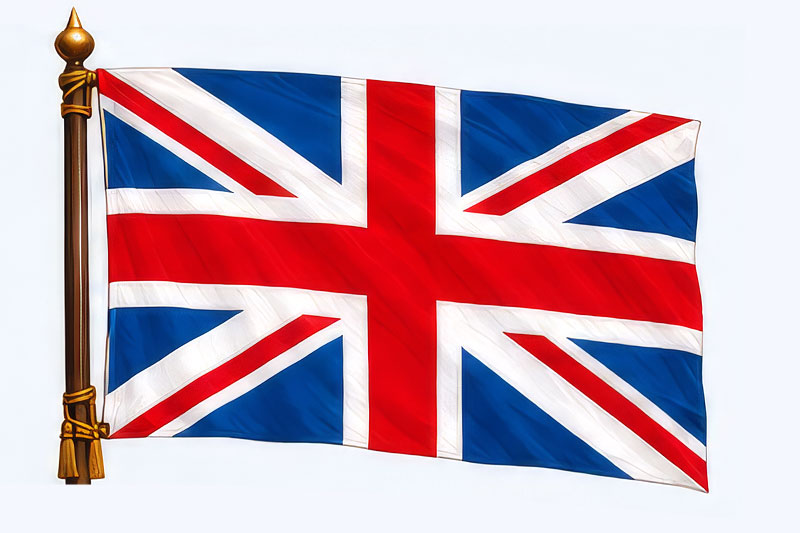
The 1801 design reflects the creation of the United Kingdom of Great Britain and Ireland. It remains the Union Flag of the United Kingdom today, despite subsequent constitutional changes.
12. England’s Flag Today — St George’s Cross
St George’s Cross is now seen at sporting events, civic occasions, the C of E and commemorations. Its history predates the United Kingdom and continues to provide England with a distinct national symbol.
Editorial note: The illustrations are interpretative artworks, not photographs of surviving medieval flags. The white dragon in illustration 2 has four legs, whereas the golden Wessex wyvern in illustration 1 has two. The Wessex and white-dragon flags, Æthelstan coin portrait and Harold II banner are reconstructions.
England’s symbols and its 1,100th anniversary
As England approaches the 1,100th anniversary of Æthelstan’s unification in 2027, its visual history offers a reminder that English identity has evolved across many different political eras. Explore England 1100 and the proposal for England Day 2027.